A Scottish police blitz on speeders has done nothing for safety. Targets set to secure more convictions were met and exceeded; more seatbelt offenders were caught. More drivers were convicted for using mobile phones, more insurance and driving licence offenders (not informing DVLA of an address change) were apprehended than ever before. Chief Constable Sir Stephen House made catching wrongdoers a priority when Police Scotland was created last year, setting targets to increase the number of speeding offences in order to “better influence driver behaviour”.
The result was that road deaths went up by 24 in 2013/14, including 55 per cent more motorcycle deaths and 50 per cent more cyclist deaths, an increase of 14 per cent.
A report by HM Inspectorate of Constabulary in Scotland suggests officers should have discretion over whether to issue warnings instead of fines. Neil Greig, the Institute of Advanced Motorists’ director of policy and research, and Edmund King, the AA’s president, said more emphasis was needed on educating rather than punishing drivers. Supt Iain Murray, head of road policy for the police was unabashed, claiming the force worked to meet Scottish Government targets to reduce road casualties. Speeding and mobile phone use “are all proven to contribute to collisions and to increase the likelihood and severity of injuries.”
QED I think.

Showing posts with label Safety. Show all posts
Showing posts with label Safety. Show all posts
Thursday, 31 July 2014


Monday, 28 July 2014
Another COTY winner

Opel and Vauxhall dealers, who hadn’t a lot of choice perhaps, accounted for the first year’s 5,000 or so Amperas. That sank to 3,184 last year and collapsed to 332 in the first five months of this, of which only 46 were in its German home market. GM Vice Chairman Steve Girsky vented frustration at Geneva: “All the governments in Europe said, ‘We want EVs, we want EVs.’ We show up with one, and where is everybody?” The answer is that they were off buying something else, real cars mostly.
COTY jurors are like governments appeasing Green voters with inglorious wind farms and wasteful subsidies. By any standards the Ampera was a disaster. Production is stopping and although GM will redesign the broadly similar Volt next year it won’t come to Europe.
There wasn’t much wrong with the Ampera. It was sensibly-sized and quite handsome, drove smoothly and quietly and as a hybrid didn’t have the range anxieties of milk-floaty plug-in electric cars, attracting complaints now about how costly they are to top-up. Apparently charging stations take money by the hour, without knowing how much electricity is actually being used. The cost can be just as much for a battery flat or near full.

I have said before that there is a FIFA flavour about Car of the Year. In 50 years COTY has never elected a Jaguar, Range Rover or Land Rover. It can’t be anti-British-ness. Munich doesn’t come off well either. There has been no BMW; a range that goes from Rolls-Royce to Mini has never made the grade except for second last year for the i3. It elected an electric Nissan yet COTY doesn’t do safety. Volvo and Saab never featured. Engineering excellence? Bentley has never made it. Production quality? There have been no Hondas. Value for money? No Skodas, no Seats but 9 Fiats, 6 Renaults and 5 Fords. I can’t understand why manufacturers get so excited by it.
Saturday, 2 February 2013
Seat belts

What are your views on safety legislation? Have you ever been saved by a seat belt, airbag or roll-hoop?
Sunday, 6 January 2013
Good drivers

Aptitudes run in families. Ours was driving. Passing driving tests first time was obligatory. The requisite gene, I am sure, was my mother's. She rode motorcycles in the war. Father wasn’t very good, but my eldest brother had whatever visual acuity or sense of balance that makes a natural driver. He never lost the keen spatial awareness and skill he showed in a rally car. Or a Challenger tank I put him into in his 70s. Son Craig shows the same sort of natural talent, masterminding yachts at Cowes or in Atlantic races. Daughter Joanna showed it as a teenager on horses. Daughter Charlotte? Well, she kept her head tumbling out of aeroplanes, much as eldest brother did a generation ago.


He didn’t crash. Kind man showed him the reverse switch only once and he backed up, counter-steering, as though he’s been doing it all his life. He leaned into corners, obeyed the traffic light and was totally unafraid. His great-grand-mama would have been so proud. But she’d be completely unsurprised. It was as natural as riding a motorcycle.
I started driving seriously aged about 12. All my family did, and I have long been convinced that the foundations of a long and safe career at the wheel are laid long before you are 17. Great credit then, to Mercedes-Benz for giving 118,000 under 16s their first drive at Mercedes-Benz World. These young people have driven around a million miles since the scheme was launched in 2007. The only requirement is to be tall enough to reach the pedals of an A-class. There is guidance from professional driving coaches in 30-minute or one-hour Driving Experiences, which extend to dynamic handling and skid management.
The youngest under-16 to drive at Mercedes-Benz World was a tall-ish seven year old. What a great use for the historic Brooklands track.
Dear Teddy. You could be behind the wheel again inside three or four years.


Sunday, 30 December 2012
Sir Jackie Stewart, campaigner

There was little doubt about the daring of Denis Sargent Jenkinson 1920-1997, pictured seated in front of me in the press tribune at Monza. A student of engineering and a conscientious objector in the Second World War, he worked as a civilian at the Royal Aircraft Establishment at Farnborough, where he met Bill Boddy, keeping Motor Sport magazine going in difficult circumstances. Janks took part, notably as a sidecar passenger for Eric Oliver, winning a world championship in 1949. His small stature and robust physique suited him well in this most hazardous occupation, and he wrote about the experience vividly.
From the 1950s he travelled Europe, not earning much from the parsimonious proprietors of Motor Sport, but with a decent car (Porsche 356, E-type Jaguar) and adequate expenses to fulfil many a boyhood dream. He was deeply respected by leading drivers, including Moss, for whom he “navigated” to win the 1955 Mille Miglia. The result was a notable report that became a classic.

I got on well with Jenks for most of the years I was in motor racing. It was a convivial business. He never concealed his contempt for colleagues, particularly those writing for national newspapers, yet often acknowledged that I took motor racing seriously and reported less sensationally than most.
I don’t think Jenks trusted me after about 1970 because of my historic association with Tyrrell and Stewart. “John Young Stewart – World Champion”, a certain beady-eyed little Scot, whose … pious whinings have brain-washed and undermined the natural instincts of some young and inexperienced newcomers to Grand Prix racing and removed the Belgian Grand Prix from Spa-Francorchamps.” Jackie had advanced principles that were changing motor racing in ways Jenks abhorred. Barriers, debris fences, safety structures in cars, seat harnesses fireproof overalls and improved medical and rescue facilities was transforming the business and Jenks hated it. He was convinced that without the dangers, motor racing was no longer heroic.
He was by no means alone. Tracks forced to re-make corners, provide run-off areas and re-write rules to making things safer applauded his angry outbursts. “Can you really ask me in all honesty to admire, or even tolerate, our current reigning World Champion Driver?” Jackie responded with dignity, but his real response was unequivocal. He was simply faster than everybody else and in terms of lives saved his legacy is secure.

One way of covering the Monaco Grand Prix was to walk round the circuit during the race, by way of the pavement. I took this picture of Lorenzo Bandini (Ferrari) leading the first lap in 1967. Unthinkable now but I was by no means alone. Bandini was overtaken and from lap 15 to lap 81 of the 100lap race lay second. The Ferrari overturned at the chicane, caught fire, trapping him underneath for several minutes, inflicting fatal burns.
Monday, 19 November 2012
Beware
If Camden Council, The Guardian and the Lib-Dems agree on something it is almost certainly restrictive, dirigiste and mistaken. They are campaigning for 20mph speed limits. The European Citizen’s Initiative is praising councils calling for 20mph, “for residential streets with populations,” and no, I don’t know what that means either. Sounds like the woolly thinking of self-serving populists.
Nobody is against measures that reduce casualties yet the overwhelming evidence is that simply posting notices and passing laws do not always work. As recently as August the Department of Transport said casualties in 20mph zones had gone up, while those on 30mph roads had gone down. Portsmouth brought in a blanket 20mph limit in 2007. The numbers of killed and injured went up from 79 to 143.
The fact is that drivers don’t pay attention and pedestrians are complacent in “Twenty’s Plenty” zones. The behaviour of neither is commendable but laying down a law is not going to change things. Let’s go instead for what works, and the 85 percentile rule by and large does. Speed limits based on what 85 per cent of traffic thinks is about right, means that 85 per cent of it complies and the 15 per cent that don’t can be weeded out and punished. It is practical, it has been the rule since urban speed limits were brought in under the 1930 Road Traffic Act, and despite increasing traffic ever since, casualties have been steadily decreasing. We must have been doing something right. Let us not allow Camden Council, The Guardian and the Lib-Dems to make a mess now.
 A 20mph zone for a 1933 Vauxhall Light Six. Does anybody recognise the road? It looks like Rest-and-be-Thankful (on which restorative work seems to be once again delayed) but it might be somewhere in Wales. I doubt our family Vauxhall of the time HS 8635 if my memory serves me, ever made it to Campbeltown but if it had, this is the road it would have taken.
Nobody is against measures that reduce casualties yet the overwhelming evidence is that simply posting notices and passing laws do not always work. As recently as August the Department of Transport said casualties in 20mph zones had gone up, while those on 30mph roads had gone down. Portsmouth brought in a blanket 20mph limit in 2007. The numbers of killed and injured went up from 79 to 143.
The fact is that drivers don’t pay attention and pedestrians are complacent in “Twenty’s Plenty” zones. The behaviour of neither is commendable but laying down a law is not going to change things. Let’s go instead for what works, and the 85 percentile rule by and large does. Speed limits based on what 85 per cent of traffic thinks is about right, means that 85 per cent of it complies and the 15 per cent that don’t can be weeded out and punished. It is practical, it has been the rule since urban speed limits were brought in under the 1930 Road Traffic Act, and despite increasing traffic ever since, casualties have been steadily decreasing. We must have been doing something right. Let us not allow Camden Council, The Guardian and the Lib-Dems to make a mess now.

Saturday, 10 November 2012
Fair cop

“The Council of the London Borough of Ealing believes that a penalty charge is payable for an alleged traffic contravention…” It was quite right. I knew when I stopped on that box junction that I shouldn’t. I had driven round the block after spotting number one daughter crossing the road. I was afraid she would dart into Lidl’s and disappear. I expected the white van to clear the junction but it didn’t. I dislike snooping cameras but you couldn’t argue with this one. It had video if I tried to argue, and I suspect the Council wouldn’t be impressed with catching number one daughter. I should have been paying more attention. I won’t do it again.
Tuesday, 30 October 2012
The lights are going out

Nobody knows if Sir Edward Grey actually said, “The lamps are going out all over Europe. We shall not see them lit again in our time.” He might have said “lights”, or “in our lifetime”. According to his memoirs he was looking out of a Whitehall window, on 3 August 1914, at a lamplighter on his rounds. As foreign secretary on the eve of the First World War he might have been more explicit. We’ll never know.
Now the lights are going out again. It’s getting on for a hundred years since Grey and once more we are into collective madness. It’s not the eve of war, but there are sure to be casualties. Lights on motorways, main roads, and town centres are being turned off to meet carbon emission targets. The M1 between Luton and Milton Keynes will have no lights from midnight until 5 in the morning. Street lights on pavements and cycleways, in city centres and residential streets will be dimmed or darkened to whoops of joy from footpads and burglars. There will be slips and falls by the infirm or unwary. To some, unlit streets will represent a curfew. An official wrote patronisingly to a complainant; the council, apparently, could not “provide tailored street lighting for each individual’s particular needs”.
The new black-out worries safety and motoring organisations, which say economic and environmental benefits are over-stated, warning that less street lighting will lead to more accidents and more crime. The Royal Society for the Prevention of Accidents (Rospa) said: “The presence of lighting not only reduces the risk of traffic accidents but also their severity. Surveys show that the public is in favour of street lighting as a way of improving road safety and that, if anything, it needs to be improved.”
Paul McClenaghan, commercial director at Halfords, said: “Poor lighting or none at all can make it very difficult for motorists to see hazards or objects clearly at night. Added to this Government figures show that road accidents increase in the week after the clocks change, so it is clear that extra vigilance is needed at this time of the year, from motorists, cyclists and pedestrians.” Paul Watters, head of roads policy at the AA, told The Daily Telegraph: “We do know that most accidents happen in the dark, it’s also comforting for people, especially if they arrive back from somewhere in the night, when they have got a late train. There are suggestions that it increases crime. Motorway drivers don’t like changing situations, from light to dark and dark to light, but I don’t think we would argue for no lighting at all. It is extremely comforting for drivers, especially in bad weather.”
Switching-off motorway lights means that 70 per cent of the network is now unlit. Sections of the M1, M2, M27, M4, M48, M5, M54, M58, M6, M65 and M66 are now unlit from midnight. (top) Bugatti Royale 41.111 with designer Jean Bugatti. French textile manufacturer Armand Esders ordered it without headlamps. He did not intend driving it at night on roads lit or unlit.
Wednesday, 10 October 2012
Car Fires

There is nothing the Guardianistas on the Today programme love more than a good scare story. This morning it was rising food prices and 138,000 Toyotas going on fire. Even its interviewee on the price of wheat was cautious about its effect on the cost of a loaf. Scott Brownlee did a decent job of saying Toyota’s recall concerned a window switch in danger of melting, and 138,000 Rav4s and Corollas were not about to incinerate themselves. Silly woman presenter kept claiming Toyota’s press release said there was a fire risk. It said nothing of the kind, but in her efforts to show how nasty big corporations are she exaggerated, and Toyota had to issue an amendment.
Toyota Window Switch Recall: Clarification On Media Reports Of ‘Fire Risk’ Issue Toyota has today announced a recall of 138,000 Yaris, Auris and RAV4 cars in the UK. This involves the electrical contact in the driver’s side Power Window Master Switch (PWMS), which may over time come to feel ‘notchy’ or sticky during operation.

Trouble was, this is the second recall of door window switches in as many days, and Honda’s press release was more alarmist. Honda said it would be trying to contact everyone who owns a Swindon-made CR-V, “because of a potentially dangerous defect that could lead to it catching fire”. The problem was spotted after one owner in Britain, and four in the United States said they could smell burning. It seems to be a faulty seal on a master switch inside the driver’s door that controls the automatic windows. If liquid seeps inside, it could overheat and the door could catch fire. Are they all using the same switch? The same supplier? The same door trim manufacturer? I think we should be told.
The pictures are of a Volvo that caught fire on a Scottish road. It started as a small conflagration under the bonnet (top), but as I watched the car comprehensively destroyed itself, with much crackling and banging as windows broke and fuel ignited. Another memorable car fire I watched was when a colleague in the Glasgow motor trade was trying to sell a VW Beetle (old air-cooled sort) to an overweight Glasgow lady. She thought she would try the back seat but was so heavy that when she sat down the batteries underneath shorted out through the seat springs. The upholstery caught fire, then the whole interior, the paint blistered and the tyres caught light. The fire service came and put it out. She didn’t buy the VW.

Tuesday, 2 October 2012
Brake:
I do not often agree with this road safety charity, but it is right to worry over 999 drivers being somehow above the law. Blue lights already make them too self-important. Director of Public Prosecutions Keir Starmer QC thinks, “police officers, ambulance drivers, and firefighters sometimes need to drive in a manner that would not be acceptable to others.” He believes prosecution, “unlikely to be appropriate in cases of genuine emergency, unless the driving is dangerous or evidence indicates a high degree of culpability.”
He claims, of course, that his proposals should not be taken as a licence for emergency workers to act as though immune from prosecution. Pious rubbish. Emergency workers already have sensible leeway, but they have far too many accidents. Between 204 and 2012 there were 265 fatalities during, or after, “police related road traffic incidents.” In 2009 police owned up to 3357 accidents. Founding fathers of the IAM, like Bob Peters, class 1 police drivers proud of their exemplary fast and safe driving, would have rejected Starmer’s absurd proposal. Where next? Exemptions for all citizens in cases of genuine emergency? Dashing back to turn the gas off? Letting the cat out? Some emergency Braking is required.
He claims, of course, that his proposals should not be taken as a licence for emergency workers to act as though immune from prosecution. Pious rubbish. Emergency workers already have sensible leeway, but they have far too many accidents. Between 204 and 2012 there were 265 fatalities during, or after, “police related road traffic incidents.” In 2009 police owned up to 3357 accidents. Founding fathers of the IAM, like Bob Peters, class 1 police drivers proud of their exemplary fast and safe driving, would have rejected Starmer’s absurd proposal. Where next? Exemptions for all citizens in cases of genuine emergency? Dashing back to turn the gas off? Letting the cat out? Some emergency Braking is required.
Friday, 28 September 2012
Too many flashing lights.
Two enormous tractors with huge wheels just went through the village with yellow front flashers, like aircraft strobe lights, and rotary-style blinkers each side. Ambulances that used to have one flashing blue light are now lit up like Christmas trees. No self-respecting wide load goes without a police escort and fairy lights. Construction trucks, long loads, dumper trucks, road-sweepers, dustbin lorries, road-menders, every amateur emergency service now has a blinking light on the roof.
Two problems. So many sparkling warnings devalue the currency. They should be reserved for real emergencies, like the ambulances, and not stuck on every truck to give the driver a sense of well-being. It’s fine for AA patrols on the hard shoulder, but some construction sites look like Guy Fawkes nights even when everybody’s parked.
Second. The old Roadcraft manual used to warn police drivers about Red Mist, the sense of urgency that comes with an emergency call. It’s now a Flashing Blue Mist and gets to the adrenalin of any driver, it seems, with an alternating light.
They ought to be rationed. Licensed. Drivers with sparklers should be held to account for every occasion they are switched on. Too many look upon them as a Turn-On.
Two problems. So many sparkling warnings devalue the currency. They should be reserved for real emergencies, like the ambulances, and not stuck on every truck to give the driver a sense of well-being. It’s fine for AA patrols on the hard shoulder, but some construction sites look like Guy Fawkes nights even when everybody’s parked.
Second. The old Roadcraft manual used to warn police drivers about Red Mist, the sense of urgency that comes with an emergency call. It’s now a Flashing Blue Mist and gets to the adrenalin of any driver, it seems, with an alternating light.
They ought to be rationed. Licensed. Drivers with sparklers should be held to account for every occasion they are switched on. Too many look upon them as a Turn-On.
Thursday, 16 August 2012
Road Casualties
It’s motorcyclists we need to control. Overall deaths and injuries are up, car victims down. “Vulnerable road users” are suffering. Cyclists – dead and injured up 13 per cent. Motorcyclists – up 8 per cent. Child pedestrians – up 14 per cent. Car users killed or badly injured – down 4 per cent. Loose talk about 40mph limits on country roads looks like political window dressing. It is born-again bikers, with not enough training or experience, and not regularly riding on their immensely fast and extremely noisy machines that are worsening the figures. Cars are getting safer. Brakes, handling, airbags and increasing use of safety belts have all helped, and although there is scope for improvement, and IAM-style qualifications should be encouraged, let’s scrutinise the figures before drawing sweeping conclusions and imposing a whole set of restrictions that won’t work.
Monday, 16 July 2012
Speed Limits
“Something must be done. This is something. Therefore we must do it.” Yes Minister Jim Hacker’s famous response. Last week’s commotion about 40 limits is just the same. Hapless Jim Hacker - hapless real-life Tom Fraser – Minister of Transport who brought in the 70mph limit at Christmas 1965, “doing something” about motorway accidents in fog.
They weren’t 100mph crashes. Hardly anybody was doing more than 50. It was a fatuous response yet, astonishingly, voters liked it. Voters love speed limits. The average voter would bring back capital punishment and now we have a government that before the election promised not to wage war on motorists, reacting the same way the socialist dirigiste useless Fraser did.
Only months ago it was talking about an 80mph limit. I didn’t believe it then and I don’t believe it now. Road casualties are up; they want to be seen Doing Something.
Yes Minister, they really are all the same.
They weren’t 100mph crashes. Hardly anybody was doing more than 50. It was a fatuous response yet, astonishingly, voters liked it. Voters love speed limits. The average voter would bring back capital punishment and now we have a government that before the election promised not to wage war on motorists, reacting the same way the socialist dirigiste useless Fraser did.
Only months ago it was talking about an 80mph limit. I didn’t believe it then and I don’t believe it now. Road casualties are up; they want to be seen Doing Something.
Yes Minister, they really are all the same.
Tuesday, 26 June 2012
Readers' letters

1985 Ford Sierra RS Cosworth
The Guardian readers’ letters were the rudest. I covered motor racing for the newpaper in the 1960s and 1970s. Pioneering stuff. Motor racing seldom made sports pages. John Samuel, sports editor recently presented with the Doug Gardner Award, wanted to be “inclusive”. He asked Adam Raphael, the motoring correspondent who went on to be a notable political writer, to cover racing. Adam didn’t want to and asked Barrie Gill, of the new (1964) Sun who might. Gill kindly suggested me.
I enjoyed The Guardian. It was demanding on writing style and I did the motoring column sometimes as well. I didn’t know about newspaper writing, had no formal training; I made it up as I went along. By good fortune John Samuel was patient. Just as fortunately perhaps, he had nobody else on hand who knew anything about motor racing.
 There was a broad church of student readers with whom I got on well. But when I was critical in the motoring column of the 70mph speed limit Guardianistas were furious. Prejudiced and abusive the roundheads went after me. They seemed to suspect that not only did I not share their dirigisme, but also (probably alone of Guardian contributors) I was never a member of a trade union. They, and readers of The Obsever, nevertheless stuck by me for 15 years.
 It was The Grauniad when I started with it. Compositry was a weakness on a small patch of floor in Grays Inn Road. Losing £120,000 a day now, they say. That’s what happens, you see...
Sierra Sapphire. Cosworth 4x4 was a development.
Sometimes it was as well not to tell readers absolutely everything. I did not disclose, even to my broader-minded Sunday Times readers in 1990 how, testing the Sierra Sapphire Cosworth in Spain, my former colleague from The Motor, Roger Bell in the passenger’s seat, pointed skywards. We were directly under the flight path to an airport and he was indicating a Boeing 747 overhead, seemingly stationary. We were both doing 150mph.
The Boeing was getting down to its landing speed approaching the runway. We were enjoying racing car speeds on an open road. Roger had been with the test team for the E-type Jaguar. In 1961, 150mph was so rare for a production car they put on crash helmets and used racing tyres. Here we were, on a sunny day, doing it in a production saloon Ford. Safe as houses at twice what the hapless Tom Fraser, Minister of Transport thought so perilous in 1965.

I didn't do 150mph in this E-type, one of the first I drove, at the Glasgow Motor Show following its introduction in Geneva. That's me on the right, with Jaguar apprentice Clive Martin outside the Hamilton newspaper that ran my first motoring column.
Saturday, 4 February 2012
Speed limit research

Speed limits should be related to the design speed of a road. Low limits on roads built for high speeds are likely to be disregarded, resulting in higher speeds than if a realistic limit is imposed. The Transport Research Laboratory TRL concluded in 1994 that changing the speed limit on motorways to 80mph might not alter traffic speeds by much. It might rise by about 3-4mph provided drivers feel the limit is reasonable. “Although there is no experimental evidence that raised speed limits result in lower speeds ... such effects are said to occur. The explanation ... has to do with the driving public's response to the reasonableness or unreasonableness of the limit. If the limit is raised to something more appropriate to the design speed of the road, then ... some drivers will respond by observing it and speeds fall.”
The TRL found evidence that “drivers driving much faster or much slower than the general traffic stream are more likely to be involved in accidents.” The speed traffic is actually doing is less important than making sure all the vehicles are going about the same speed in relation to one another.
Analysis of the effect of speed on accidents has always been problematical and the TRL’s findings endorses the view that blanket limits can sometimes be unproductive. Limits should reflect the dangers of individual stretches of road and there would be more benefit from reducing the speed of the fastest drivers than reducing speeds for all drivers. This is especially true for urban roads where engineering and enforcement targeting the fastest drivers tends to work.
In a report compiled in 2000 the TRL said: “The scope for reducing accidents by means of speed management depends on the operational characteristics of the road. The often-quoted broad result that a ‘5% reduction in accident frequency results per 1mph reduction in average speed’ has been investigated carefully; although it remains a robust general rule, the percentage reduction in accident frequency per 1mph reduction has been shown to vary according to road type and average traffic speed. It is: about 6% for urban roads with low average speeds; about 4% for medium speed urban roads and lower speed rural main roads; about 3% for the higher speed urban roads and rural main roads. In urban areas the potential for accident reduction is greatest on those roads with low average speeds. These are typically busy main roads in towns with high levels of pedestrian activity, wide variation in speeds, and high accident frequencies.”
The TRL found evidence that “drivers driving much faster or much slower than the general traffic stream are more likely to be involved in accidents.” The speed traffic is actually doing is less important than making sure all the vehicles are going about the same speed in relation to one another.
Analysis of the effect of speed on accidents has always been problematical and the TRL’s findings endorses the view that blanket limits can sometimes be unproductive. Limits should reflect the dangers of individual stretches of road and there would be more benefit from reducing the speed of the fastest drivers than reducing speeds for all drivers. This is especially true for urban roads where engineering and enforcement targeting the fastest drivers tends to work.
In a report compiled in 2000 the TRL said: “The scope for reducing accidents by means of speed management depends on the operational characteristics of the road. The often-quoted broad result that a ‘5% reduction in accident frequency results per 1mph reduction in average speed’ has been investigated carefully; although it remains a robust general rule, the percentage reduction in accident frequency per 1mph reduction has been shown to vary according to road type and average traffic speed. It is: about 6% for urban roads with low average speeds; about 4% for medium speed urban roads and lower speed rural main roads; about 3% for the higher speed urban roads and rural main roads. In urban areas the potential for accident reduction is greatest on those roads with low average speeds. These are typically busy main roads in towns with high levels of pedestrian activity, wide variation in speeds, and high accident frequencies.”

Thursday, 8 September 2011
The Driving Test
You have to assume both drivers of this 1940s Ford Prefect agreed, in general, which way they wanted to go. Experimental, but ultimately unsuccessful driving school car.
Even veterans could learn from The Driving Test, a 100 minute DVD by Brian M Stratton. This is more than a primer to get L drivers through their test. It is that too, with advice on everything from pre-test nerves to what you should do if you encounter a bin lorry during it. It is also a revision course for experienced drivers and I strongly recommend it. Brian Stratton is an instructor who trained with the Driving Standards Agency, which sets the driving test, giving him a special insight into what examiners expect.

The driving test has certainly developed over the years, with up to a quarter of the 40 minutes or so it takes, given to “independent driving”. This furnishes candidates with a proper driving task, going from here to there by following a route. It can mean simply navigating by road signs or by a diagram on a card. Wasn’t like that in my day. You went where the officer said. It’s much more grown-up nowadays.

Yet how often one hears drivers cheerfully admit they wouldn’t pass their driving test now. Exasperating. They should get this DVD and go through the dummy specimen test with a “candidate” providing a commentary about what he is doing. Invaluable. And if anyone claims to have learnt nothing from watching, they are either being untruthful or they are dangerous. It is scarcely surprising young people fail the test more often than they did when I was 17. The standard is much higher.
Stratton’s DVD is entertaining. There is great footage of a 1935 driving test, with a 10HP Model C Ford and a V8 carefully avoiding one another. Certainly the best £10 any L-driver will spend. Go to instructor-training.co.uk or amazon.co.uk. The Driving Test, Essential Information, Brian M Stratton.


Even veterans could learn from The Driving Test, a 100 minute DVD by Brian M Stratton. This is more than a primer to get L drivers through their test. It is that too, with advice on everything from pre-test nerves to what you should do if you encounter a bin lorry during it. It is also a revision course for experienced drivers and I strongly recommend it. Brian Stratton is an instructor who trained with the Driving Standards Agency, which sets the driving test, giving him a special insight into what examiners expect.

The driving test has certainly developed over the years, with up to a quarter of the 40 minutes or so it takes, given to “independent driving”. This furnishes candidates with a proper driving task, going from here to there by following a route. It can mean simply navigating by road signs or by a diagram on a card. Wasn’t like that in my day. You went where the officer said. It’s much more grown-up nowadays.

Yet how often one hears drivers cheerfully admit they wouldn’t pass their driving test now. Exasperating. They should get this DVD and go through the dummy specimen test with a “candidate” providing a commentary about what he is doing. Invaluable. And if anyone claims to have learnt nothing from watching, they are either being untruthful or they are dangerous. It is scarcely surprising young people fail the test more often than they did when I was 17. The standard is much higher.
Stratton’s DVD is entertaining. There is great footage of a 1935 driving test, with a 10HP Model C Ford and a V8 carefully avoiding one another. Certainly the best £10 any L-driver will spend. Go to instructor-training.co.uk or amazon.co.uk. The Driving Test, Essential Information, Brian M Stratton.

Wednesday, 8 June 2011
Safety Fast

1940's reminder: Second World War Jeep at Goodwood
Speeding has become a scapegoat. Myth and folklore has led to it being blamed for every accident while real causes are neglected. Police, local authorities, safety campaigners and shrill lobbyists erect flashing signals and create camera partnerships to persuade voters something is being done about safety. It is a fraud. Speed laws provide every self-righteous roundhead and fretting dirgiste with political capital.
Populist polls would restore hanging. The Mob would dance round the guillotine. It is the same with speeding. When I was a parish councillor, pushing for a 20mph speed limit through the village would have made me popular. There was always agitation about, “accidents waiting to happen.” They never did of course. The street was perfectly safe; police did checks showing nearly everybody drove well within the limit and accidents were unknown.
Where I live now is being similarly lobbied and I can see why. Enormous trucks coming through at 50mph is scary, I hate them. Yet not many accidents are caused by driving too fast. Some 57% are due to drivers, 27% to combinations of roadway and driver, 6% to combined vehicle and driver, 3% solely to roadways. Combined roadway, driver and vehicle accounts for 3%, which leaves 2% solely to vehicles. The last 1% is down to combined roadway and vehicles. The drivers’ 57% is down to inattention, bad judgement at junctions, distraction, fatigue, losing control in bad weather and other causes. Excessive speed scarcely features. The money, time and effort expended on speeders is largely wasted. It would be far better devoted to driver training and testing to IAM standards.
Speeding is not the first safety myth. In 1992 even Rospa challenged a hoary old legend.

Sunday Times: Motoring, 30 August 1992
Blaming the rise in road deaths during 1941 on the blackout is wrong, according to the Royal Society for the Prevention of Accidents (ROSPA). New research shows it was fewer traffic police and a withdrawal of safety propaganda that led to 9,169 fatalities on British roads in the second year of war.
The historian A D Harvey claims in the current issue of ROSPA's magazine Care on the Road, that the casualty rate slowed in 1942 and 1943, when the black-out with its dimly-lit streets and hooded headlights was still in force.
Harvey's research reveals that the only changes were more policing, and better safety propaganda. Similar remedies applied now could have telling effects.
The carnage of the 1930s, with over 7,000 deaths a year led to the introduction of The Highway Code, but even this failed to stem the destruction. In desperation the Minister of Transport Leslie Hore-Belisha, imposed the 30mph speed limit, set up pedestrian crossings, and brought in the driving test.
Fatal casualties reached a peacetime peak of 7,343 in 1934, before Hore-Belisha's Road Traffic Act checked the rise. There were 6,648 fatal accidents on British roads in 1938. But after the street lights were switched off in September 1939, the toll rose dramatically. The total for the year was 8,272. Newspapers complained during the 'phoney war' that the blackout was killing more civilians than the enemy.
The Birmingham Post blamed drivers' exasperation at the absence of road direction signs, which had been painted over or taken down to confuse invaders. The Manchester Guardian's explanation for so many accidents was, 'the psychological effect of living dangerously,' in war-time. The Home Office took this to mean, 'War-dangers have caused road-dangers to be taken lightly.' Among other explanations was the inexperience of service drivers. Yet military vehicles did not show up as the culprits.
Pedestrians suffered worst in the early months of the black-out, but by 1941 they were keeping well out of the way.
The slaughter prompted a conference at the Home Office in 1941. The Home Office took the view that the biggest single cause was diminished police supervision, a conviction shared by chief constables. Young policemen had been called up, and those left were busy enforcing black-out regulations and taking part in civil defence.
'The Police War Reserve has not the same interest as the regular police,' according to the chief constable of Manchester. There was a failure to prepare the reservists for traffic policing, and road safety publicity campaigns, developed in the 1930s were run down.
The chief constable of Lancashire complained that, 'The instructions to school children which had largely fallen off during the war were worth continuing'.
Following the conference, policing was stricter, and road safety publicity was revived. The result was a reduction in the number of deaths in 1942 to 6,926, and in 1943 to 5,796. The figure continued downwards to its peace-time low point of 4,513 in 1948.
The toll increased again in the 1960s, but the trend is now downwards. Despite huge increases in traffic, speed, and annual mileage, road deaths last year were once again at the 1948 level, at 4,520.
That was 1992. By last year road deaths in the UK were less than half that, at 2,222 following road improvements, better cars with better handling, roadholding, steering, brakes, seatbelts, airbags, better visibility and better driving. More motorways have reduced casualties, drink-driving has diminished. It is not because of what we are paying to speed cameras. We are driving every bit as fast as we were in 1992.
Tuesday, 31 May 2011
Speed Limits: Other drivers should stick to them
Either there was little support for any change in the 70mph speed limit, or the 1,519drivers in the MORI sample for the 1995 Lex Report on Motoring were a self-righteous lot. My Sunday Times motoring column of 22 January 16 years ago noted about a third enjoyed driving fast, two-thirds did not, yet scarcely any wanted the limit raised to 80mph, as the 2011 Minister of Transport is broadly hinting. The 1995 survey showed strong opposition, among the surveyed, to lowering the limit, yet two months earlier anonymous magazine readers voted nine to one in favour of raising it to 80mph with stricter policing. It looks as though there is a dichotomy about speed limits; Everybody Else should slow down.
A strong majority (nearly two drivers out of three according to the Lex survey) believed driving too fast the second most frequent cause of accidents after drink-driving. There was support for speed cameras although respondents declared these made no difference to their own driving - presumably beyond reproach - but were useful for slowing others.
Drunks, speeders, the over-tired, and ,'driving too close to the vehicle in front' were blamed for accidents, disregarding bad weather, congestion, faulty road design, vehicle defects and practically everything else.
Surveys, however reliable and illuminating on facts, suffer from respondents telling interrogators not so much what they think, but what they feel they ought to think. Pollsters try to take this into account by 'weighting' results, yet blaming drinking and driving as the most frequent cause of road accidents shows how strong the social pressure on it has become. The real figure is less than one-fifth. The popular view that 'accidents happen to other people' now reads, 'accidents happen to other people who have been drinking too much and driving too fast.'
Speed has always been a target for safety propagandists. The 70mph limit was imposed in 1965 by a Labour Minister of Transport, Tom Fraser, in response to a spate of accidents on foggy motorways. It was scarcely a measured reaction, but gave the impression of determination to do something. Fraser called it an experiment and asked the Transport and Road Research Laboratory (TRRL) to look into it.
The results were at best inconclusive, at worst deceitful. The TRRL knew on which side its bread was buttered and to accommodate the new incumbent, the non-driving Barbara Castle, reached a suitably equivocal conclusion. Mrs Castle made the limit permanent. It made no difference to the fog accidents, of course, and enforcement was patchy. Motorways remained the safest roads in the country accounting for just 3 per cent of the casualties, 11 injury accidents per hundred million kilometres compared with 108 in built-up areas and 33 in non-built-up areas.
Modern technology has made enforcement easier. Cameras, Vascar, unmarked cars, and radar guns make motorway speeders more likely to be caught. The AA supports the 70mph limit and says two-thirdsof its members agree. The RAC advocates a review. 'We have the worst of both worlds,' it says. 'We have a limit that is ignored by the majority, including the police. We ought to ask why we have a 70mph limit. If it is right then it should be enforced, if it isn't, what should it be?'
A strong majority (nearly two drivers out of three according to the Lex survey) believed driving too fast the second most frequent cause of accidents after drink-driving. There was support for speed cameras although respondents declared these made no difference to their own driving - presumably beyond reproach - but were useful for slowing others.
Drunks, speeders, the over-tired, and ,'driving too close to the vehicle in front' were blamed for accidents, disregarding bad weather, congestion, faulty road design, vehicle defects and practically everything else.
Surveys, however reliable and illuminating on facts, suffer from respondents telling interrogators not so much what they think, but what they feel they ought to think. Pollsters try to take this into account by 'weighting' results, yet blaming drinking and driving as the most frequent cause of road accidents shows how strong the social pressure on it has become. The real figure is less than one-fifth. The popular view that 'accidents happen to other people' now reads, 'accidents happen to other people who have been drinking too much and driving too fast.'
Speed has always been a target for safety propagandists. The 70mph limit was imposed in 1965 by a Labour Minister of Transport, Tom Fraser, in response to a spate of accidents on foggy motorways. It was scarcely a measured reaction, but gave the impression of determination to do something. Fraser called it an experiment and asked the Transport and Road Research Laboratory (TRRL) to look into it.
The results were at best inconclusive, at worst deceitful. The TRRL knew on which side its bread was buttered and to accommodate the new incumbent, the non-driving Barbara Castle, reached a suitably equivocal conclusion. Mrs Castle made the limit permanent. It made no difference to the fog accidents, of course, and enforcement was patchy. Motorways remained the safest roads in the country accounting for just 3 per cent of the casualties, 11 injury accidents per hundred million kilometres compared with 108 in built-up areas and 33 in non-built-up areas.
Modern technology has made enforcement easier. Cameras, Vascar, unmarked cars, and radar guns make motorway speeders more likely to be caught. The AA supports the 70mph limit and says two-thirdsof its members agree. The RAC advocates a review. 'We have the worst of both worlds,' it says. 'We have a limit that is ignored by the majority, including the police. We ought to ask why we have a 70mph limit. If it is right then it should be enforced, if it isn't, what should it be?'
Wednesday, 11 May 2011
Unintended consequencies
Not before time, there's proposed safety legislation not obsessed with speeding. Proposals for new powers so police can issue tickets for bad driving are all very well, but begs the question of how you catch the miscreants. One sees drivers weaving in and out of motorway traffic, risking theirs and everybody else's necks, and just wish there was a patrol car there to scoop them up. There never is. And with the passing of a regime that thought it could enforce safety by speed cameras while reducing traffic police, maybe we are on the threshold of a new era.

We need more patrol cars like this Vauxhall Insignia
Unfortunately making new regulations does not follow logical processes. This 1993 Sunday Times column was concerned about unintended consequences. The original copy for "proposed law..." is attached.


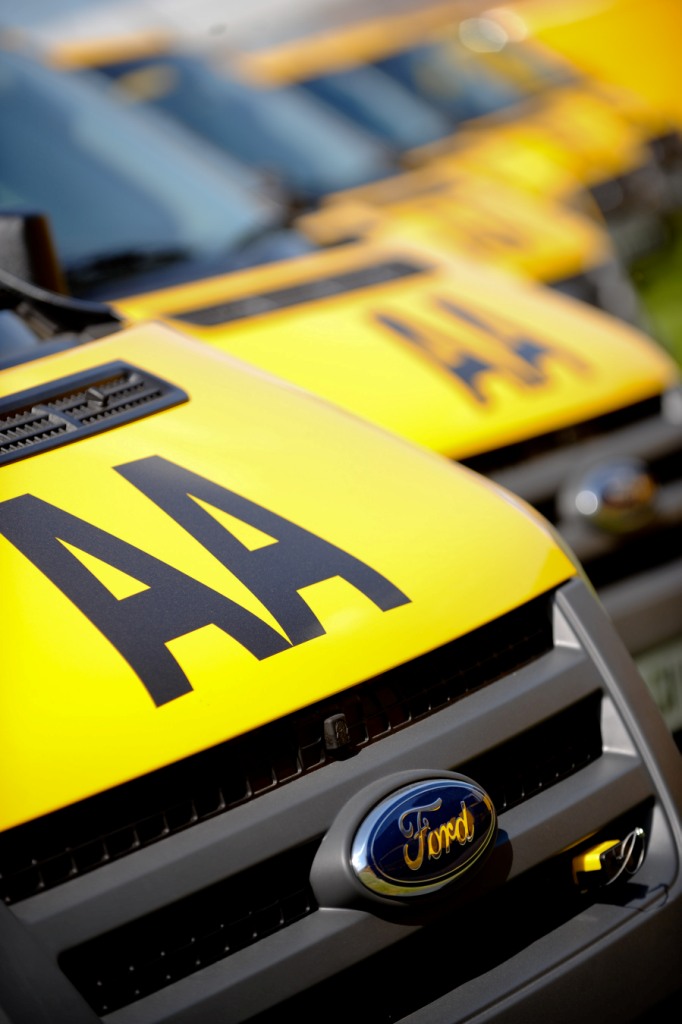
The AA has just taken delivery of a fleet of new Ford Transits.
Sunday Times: Motoring 02 May 1993
DEATH BY DANGEROUS DRIVING
The creation of a new offence of causing death by driving is to be looked at by the AA as soon as the proposals are drawn up for a new criminal justice bill in the autumn. It is barely a year since the Road Traffic Act introduced two offences, causing death by dangerous driving and causing death by careless driving while over the prescribed blood-alcohol limit. Instead there will be a new single offence with double the existing maximum jail term of five years.
Courts will need to take account of the circumstances of accidents to make a distinction between misdemeanours with unexpectedly tragic consequences and minor shunts. 'We need to make sure that motoring offences do not get out of proportion,' an AA spokesman said. 'Causing death while at the wheel of a car must relate to similar offences in other areas, although we acknowledge public concern over the powers judges have for dealing with the lunatic fringe who drive without concern for life.'
A driver who runs into a car stationary at traffic lights is clearly culpable. But the difference between the consequences may be no more than a matter of chance. The driver of the stationary car may get a stiff neck when his headrest cushions the blow, step from his damaged vehicle and exchange names and addresses before driving off, aggrieved but alive.
Another stationary car might have no head restraints. They are a relatively recent safety feature. In an identical accident with the same degree of carelessness by the offending driver, whiplash could break the driver's neck and kill him.
Consequences in traffic accidents can often be a matter of luck - running into a car with safety features against running into one without. Driver B could face a custodial sentence of up to ten years against driver A getting a caution, a fine, and a few points on his driving licence for essentially the same misdeed, running into the back of a stationary car.
Drink-driving is a different issue. Impairment through drinking is a serious business, the courts take it seriously, and the distinction of a separate offence of causing death while unfit to drive through drink should remain.
But there is a distinction between the driver who crashes carelessly or recklessly into a bus shelter when it is empty, and the one who kills all the occupants. The difference rests only on whether anyone was in the shelter at the time. In one case it might mean a wigging by the bench, in the other a long term of imprisonment.
The logic of increasing penalties according to the consequences of transgressions, would imply decreasing them where the risks are small. Speeding at 3am on an empty motorway in clear weather would become less serious than recklessly flouting the law on a busy afternoon.
Reckless, careless, driving without due care and attention, or whatever it may be called under various road traffic acts, now generally comes to light when there has been an accident. Yet it is the bad driving that is the offence, not whether the driver knocks down a tree or kills a sheep.
In the last four years nearly 100 cases of apparently lenient sentences on drivers involved in accidents have been referred by the Attorney General to the Court of Appeal. Fourteen involved fatalities. The protests the Home Office receives over sentences on killer-drivers are overwhelming.
It is difficult not to take account of fatalities in assessing culpability, but leaving aside the drink-driving issue, not many drivers set out to kill, and pressing for fierce penalties on those who do will not do much for deterrence and could look like a cry for vengeance.

We need more patrol cars like this Vauxhall Insignia
Unfortunately making new regulations does not follow logical processes. This 1993 Sunday Times column was concerned about unintended consequences. The original copy for "proposed law..." is attached.

The AA has just taken delivery of a fleet of new Ford Transits.
Sunday Times: Motoring 02 May 1993
DEATH BY DANGEROUS DRIVING
The creation of a new offence of causing death by driving is to be looked at by the AA as soon as the proposals are drawn up for a new criminal justice bill in the autumn. It is barely a year since the Road Traffic Act introduced two offences, causing death by dangerous driving and causing death by careless driving while over the prescribed blood-alcohol limit. Instead there will be a new single offence with double the existing maximum jail term of five years.
Courts will need to take account of the circumstances of accidents to make a distinction between misdemeanours with unexpectedly tragic consequences and minor shunts. 'We need to make sure that motoring offences do not get out of proportion,' an AA spokesman said. 'Causing death while at the wheel of a car must relate to similar offences in other areas, although we acknowledge public concern over the powers judges have for dealing with the lunatic fringe who drive without concern for life.'
A driver who runs into a car stationary at traffic lights is clearly culpable. But the difference between the consequences may be no more than a matter of chance. The driver of the stationary car may get a stiff neck when his headrest cushions the blow, step from his damaged vehicle and exchange names and addresses before driving off, aggrieved but alive.
Another stationary car might have no head restraints. They are a relatively recent safety feature. In an identical accident with the same degree of carelessness by the offending driver, whiplash could break the driver's neck and kill him.
Consequences in traffic accidents can often be a matter of luck - running into a car with safety features against running into one without. Driver B could face a custodial sentence of up to ten years against driver A getting a caution, a fine, and a few points on his driving licence for essentially the same misdeed, running into the back of a stationary car.
Drink-driving is a different issue. Impairment through drinking is a serious business, the courts take it seriously, and the distinction of a separate offence of causing death while unfit to drive through drink should remain.
But there is a distinction between the driver who crashes carelessly or recklessly into a bus shelter when it is empty, and the one who kills all the occupants. The difference rests only on whether anyone was in the shelter at the time. In one case it might mean a wigging by the bench, in the other a long term of imprisonment.
The logic of increasing penalties according to the consequences of transgressions, would imply decreasing them where the risks are small. Speeding at 3am on an empty motorway in clear weather would become less serious than recklessly flouting the law on a busy afternoon.
Reckless, careless, driving without due care and attention, or whatever it may be called under various road traffic acts, now generally comes to light when there has been an accident. Yet it is the bad driving that is the offence, not whether the driver knocks down a tree or kills a sheep.
In the last four years nearly 100 cases of apparently lenient sentences on drivers involved in accidents have been referred by the Attorney General to the Court of Appeal. Fourteen involved fatalities. The protests the Home Office receives over sentences on killer-drivers are overwhelming.
It is difficult not to take account of fatalities in assessing culpability, but leaving aside the drink-driving issue, not many drivers set out to kill, and pressing for fierce penalties on those who do will not do much for deterrence and could look like a cry for vengeance.
Tuesday, 12 April 2011
More gloom from the AA

The AA should stick to what it used to be good at.
Tick-box stuff from the AA. It's worried about the MOT Test. Says 94% of 18,700 members polled last summer thought it quite or very important to road safety. What this means is 93% ticked the box saying quite important and 1% very important. What is the AA thinking about adding exclamation marks to fretting over a 40% failure rate, for a test brought in fifty years ago? Cars are safer, they last longer, and although 62% believed extending tests to every other year would lead to more unsafe cars on the road, that means 38% didn’t.
AA publicity is Nannysome: “Reliance on the MoT test as a yearly safety check is best illustrated by the 17.6% failure rate on lighting and signalling, the vast majority of which could be fixed by the owner soon after a bulb blows. ‘Roads this winter have been littered with cars driving with a headlight, tail light or stop light out. The only time many of these drivers do anything about it is when the car goes for an MoT test or when traffic police pull them over,’ says Edmund King, the AA’s president.” Who, it must be said, will do anything to get himself a sound-bite. Being gloomy works best.
Far better to believe Marie Woolf in The Sunday Times: “Drivers will be required to take fewer MoT tests under government plans that could save motorists hundreds of pounds. Ministers are preparing to relax the frequency of vehicle checks - possibly replacing annual MoTs with tests every two years. Philip Hammond, the transport secretary, wants to delay the first MoT on a new car from three years to four. The government is proposing to consult on other options - the most liberal would allow MoTs every two years over the subsequent six years. That would mean only four tests in 10 years, halving the number.”
MoT tests at £55 invariably go up when testers suggest new tyres or shake their head over rusty sills. Hammond wants to remove the burden for drivers facing petrol price rises. Cars now have long service intervals, most have technology that warns of faults so we should make the most of improvements in cars since the grease gun was banished and structural failures caused accidents.
The Sunday Times also says: “The transport secretary is looking at the motorway speed limit: 70mph is too slow for modern cars and 80mph would be acceptable given the far better brakes and safety measures in cars today. That could be enhanced by "smart" speed limits, which would vary according to road conditions. These ideas are encouraging if they lead to action. It won't end the war on the motorist but it will make driving a bit cheaper and more pleasurable.” Hooray to that.
Glum AA will shake its head. Edmund King will be on every news channel except perhaps Al-Jazeera.

Picture from the archives: Original Mercedes-Benz 300SL photographed at Brooklands.
Subscribe to:
Posts (Atom)
LinkWithin
