Showing posts with label Land Rover. Show all posts

Wednesday, 13 August 2014

Footballers' cars

Earning £31,000 a week you could buy a new Range Rover every fortnight. Yet fifty Premier League footballers are having to borrow the money. Oracle, which describes itself as a luxury finance broker, says players use Oracle Finance as a tax-efficient way of buying supercars. The broker’s insight into super-rich sports stars’ buying habits shows most of them go for Range Rovers. The average Premier League player, according to Deloitte’s annual review earns £1.6 million; the top clubs’ combined salary bill is over £1.78billion. Manchester City’s wage bill alone is £233million. Ahead of the start of the Premiership season this weekend Oracle names football stars’ top 10.

Range Rovers win. Oracle Finance managing director Peter Brook says: “We looked back at our records over the last five years and weren’t surprised the Range Rover was top. We can’t say which footballers use us because of client confidentiality, but we work with some of the biggest names in the footballing world and have helped hundreds of players, managers and agents fund their dream cars.”

The top 10 most popular are:

1 Range Rover 28
2 Bentley Continental GT 26
3 Range Rover Sport 24
4 Audi Q7 21
5 BMW X5 18
6 Porsche Cayenne 16
7 Lamborghini Gallardo 13
8 Ferrari 458 8
9 Maserati Gran Turismo 4
10 Aston Martin DB9 3

Mr Brook said: “Bentley was extremely close to taking the number one spot in our Premiership poll with the GT, but it’s clear SUVs are a favourite with footballers. Our clients like their cars to be luxurious with high-up driving positions, which is why they prefer 4x4s to out-and-out supercars. Few cars offer all that like a full-fat Range Rover.”

I drive Range Rovers (top and bottom) at Land Rover’s testing track, Eastnor Castle and (middle) on the 1970 press launch at Goonhilly tracking station. Picture from The Land Rover 65 ebook £8.04 on Amazon

Monday, 28 July 2014

Another COTY winner

COTY jurors aren’t voting for Car of the Year. They are voting to look Green. Why else would they have elected the Ampera in 2012? They surely can’t have expected it to sell more than a handful. They’re not that stupid. No, they are spooked, along with governments round the world, by what WS Gilbert called greenery yallery Grosvenor Gallery foot-in-the-grave young men. Or women.

Opel and Vauxhall dealers, who hadn’t a lot of choice perhaps, accounted for the first year’s 5,000 or so Amperas. That sank to 3,184 last year and collapsed to 332 in the first five months of this, of which only 46 were in its German home market. GM Vice Chairman Steve Girsky vented frustration at Geneva: “All the governments in Europe said, ‘We want EVs, we want EVs.’ We show up with one, and where is everybody?” The answer is that they were off buying something else, real cars mostly.

COTY jurors are like governments appeasing Green voters with inglorious wind farms and wasteful subsidies. By any standards the Ampera was a disaster. Production is stopping and although GM will redesign the broadly similar Volt next year it won’t come to Europe.

There wasn’t much wrong with the Ampera. It was sensibly-sized and quite handsome, drove smoothly and quietly and as a hybrid didn’t have the range anxieties of milk-floaty plug-in electric cars, attracting complaints now about how costly they are to top-up. Apparently charging stations take money by the hour, without knowing how much electricity is actually being used. The cost can be just as much for a battery flat or near full.

I have said before that there is a FIFA flavour about Car of the Year. In 50 years COTY has never elected a Jaguar, Range Rover or Land Rover. It can’t be anti-British-ness. Munich doesn’t come off well either. There has been no BMW; a range that goes from Rolls-Royce to Mini has never made the grade except for second last year for the i3. It elected an electric Nissan yet COTY doesn’t do safety. Volvo and Saab never featured. Engineering excellence? Bentley has never made it. Production quality? There have been no Hondas. Value for money? No Skodas, no Seats but 9 Fiats, 6 Renaults and 5 Fords. I can’t understand why manufacturers get so excited by it.

Thursday, 8 May 2014

100 BEST CARS

Mini, McLaren, Jaguar and Range Rover are easy leaders in Autocar’s list of Britain’s best-ever 100 cars. I’ve no problem endorsing the first couple of dozen but, notwithstanding Gordon Murray’s ingenious contribution, the Yamaha Motiv.e at 5 looks like lip-service to greenery-yallery. The Jaguar XJ220 also poses a question. It was neither a commercial nor technical success and needed a lot of fettling before it reached reality. Driving it was like looking at the world through a letterbox. The Aston Martins in the list are an odd bunch with no ground-breaking DB2, elegant DBS or Ian Callum DB7. Similarly it’s difficult to include a D-type Jaguar – OK on the Mulsanne straight but a bit of a handful on corners – and leave out the C-type which was more precise and exciting.
McLaren F1 (above): Collected daughter Joanna from school during my road test. She’s older now, still beautiful.
Austin-Healey Sprite. 71st. This was my second one at Turnberry. Wonderfully crisp, precise car.
Lotuses are questionable on grounds of quality and reliability but I’m surprised there is no Elan Plus2S. It was beautifully proportioned. I once did 300 miles in three hours with one. There you are the older I get the faster I was. I would not include any TVR; all I drove were just brute force and ignorance. Blower Bentleys were something of an aberration. I suppose they were glamorous but never won anything like the unsupercharged cars. Derby Bentleys are missing from the list. Surely the Silent Sports Car deserves better. Jensen-Healey – delete. Not well made, hastily modified and really quite dull. Same goes for the Daimler Dart SP250. The Edward Turner engine was ok but Daimler was so strapped for cash it had to cobble up a horrid plastic body that creaked and cracked.
One of my first drives in an E-type; Scottish Motor Show after introduction at Geneva in 1961 (below), with Jaguar apprentice Clive Martin.
No Bristols please. Except for the BMW-based 400 and the beautiful 404 they were heavy and lugubrious. I never went for the mystique so assiduously promoted by writers like the matchless Leonard Setright. Triumph Stag? I thought it was rubbish when I went on the press launch. Hillman Imp? I owned one and when it went it was OK; I drove it to Maranello where I had lunch with Enzo Ferrari, but it was not made very well. Same goes for any Avenger, even the Avenger Tiger. The press launch was on Malta where we couldn’t drive them far enough to grow suspicious of unreliability. The Morgan 3 wheeler or Plus 4 were fine, but the Plus 8 was where Morgan began to lose its way and power outstripped handling. I wouldn’t include a Delorean in any list except perhaps one on how not to develop a sports car. It was terrible. Reliant Scimitar? A definite maybe. Triumph TR5 - not bad until they put a wiggly independent back-end on making it pitch and curtsy. Triumph 1300 absolutely not. And why relegate the MGA to 95th? Shame
Range Rover. Deserves its place. Took this on the press launch by Goonhilly Down, 1970.


Love lists
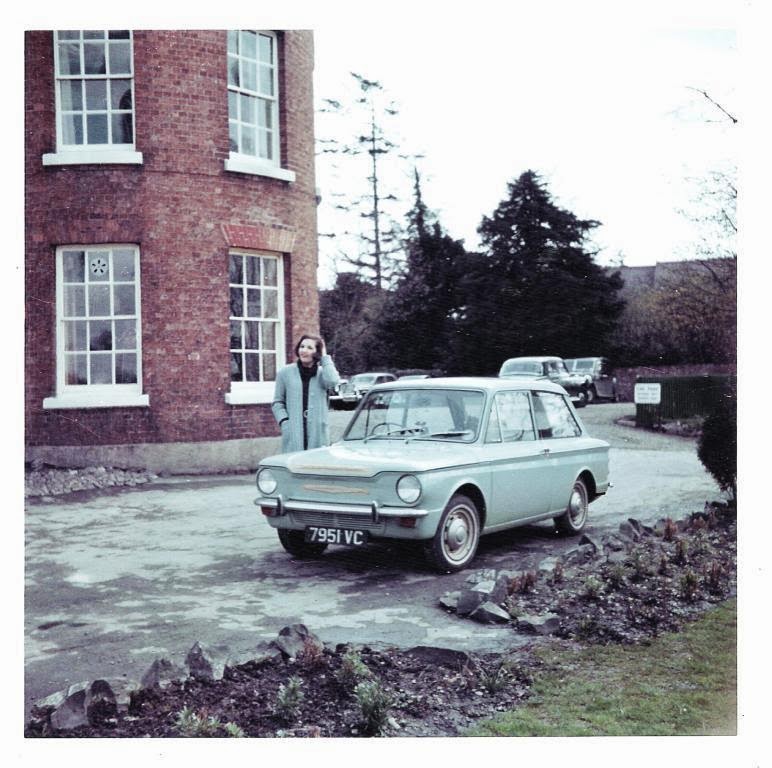
Hillman Imp. On road test for The Motor with Penny Duckworth by door. Pre-launch picture so badges taped over.

100.Range Rover Evoque 99. Ginetta G40R 98. Vauxhall Astra 97. Marcos TSO 96. Honda Civic 95. MGA 94. Vauxhall Chevette HSR 93. Triumph Dolomite Sprint 92. Allard J2 91. Honda Jazz 90. Sunbeam Tiger 89. Nissan Juke 88. Invicta Black Prince 87. Noble M12 86. Lotus Carlton 85. Caterham Seven 160 84. Caparo T1 83. Rolls-Royce 10 HP 82. Triumph TR5 PI 81. Radical RXC 80. Triumph 1300 79. Daimler SP250 Dart 78. Morgan 4/4 77. Renault Megane RS 225 76. Noble M600 75. Lotus Sunbeam 74. Morgan Plus 8 73. BAC Mono 72. Gordon-Keeble 71. Austin-Healey Sprite 70. MGB GT 69. Bristol Fighter 68. Ford Cortina 1600E 67. Bowler EXR 66. AC Ace 65. Rolls-Royce Silver Shadow 64. Austin FX4 63. Napier-Railton 62. Caterham Supersport 61. Triumph 2000 60. Jaguar F-type 59. Morgan 3-wheeler 58. Reliant Scimitar 57. TVR Sagaris 56. Ford Escort RS2000 55. Bentley Continental GT 54. Ford Capri RS3100 53. Delorean DMC-12 52. Aston Martin V8 51. Ascari KZ1 50. Aston Martin V12 Vantage S 49. Subaru Impreza WRC 48. Hillman Avenger Tiger 47. Triumph Stag 46. Hillman Imp 45. Lister Storm 44. Rover P5B 43. Lotus Evora 42. Rover P6 3500S 41. Nissan Qashqai 40. Ariel Atom 39. Vauxhall Prince Henry 38. Aston Martin One-77 37. Rover 75 36. Jaguar XJ 35. Austin Seven 34. Bristol Blenheim 33. Lotus Cortina 32. Austin-Healey 3000 31. Aston Martin Vanquish 30. Lotus Seven 29. Land Rover 28. Jensen-Healey 27. Lotus Esprit 26. MG Midget 25. McLaren 12C 24. Morris Minor 23. Lotus Elan 22. TVR Speed 12 21. Rover SD1 20. TVR Chimaera 19. BMW Mini 18. Bentley Blower 17. Jaguar XF 16. Ford GT40 15. Rolls-Royce Phantom 14. Lotus Elise 13. Jaguar D-type 12. Ford Sierra RS Cosworth 11. Jensen FF 10. Ford Escort Mexico 9. TVR Griffith 8. Aston Martin DB5 7. Jaguar XJ220 6. McLaren P1 5. Yamaha MOTIV.e 4. Range Rover 3. Jaguar E-type 2. McLaren F1 1. original Mini

Works Austin-Healey 3000 rally car test. I am the fresh-faced youth.

Tuesday, 6 May 2014

Kintyre

It was probably rash for Land Rover to take a full page of The Daily Telegraph claiming you could drive across Kintyre. I knew Kintyre. In 1940 I watched Donald Smith of Drumalea set off, with Home Guard* armband and rifle, to scan sea and sky for Germans. We had family in Campbeltown. My favourite uncle Johnstone Milloy; his sisters Flora, Jessie and Minnie were teachers who, it seemed, had educated generations. My step-grandmother Martha came from Drum-something-else near Machrihanish where I watched Spitfires, and Liberators from America.

So I knew the dotted line in Land Rover’s ad was a boggy hillside and challenged it. I took one of the new V8 Land Rovers on it and got bogged down. Land Rover was cross, said I hadn’t been driving it properly so sent top cross-country driver Roger Crathorne, a Range Rover development engineer, to show me how. They sent a Range Rover, with a winch and flew me to Machrihanish. A Land Rover Product Strategist, brought along the same V8 Land Rover with the same tyres I had used. A wet peat bog was passed by outflanking it. A ridge that had looked impassable because there was a ditch the other side proved no great difficulty. The secret was to tackle it obliquely so that there was always one wheel on hard standing.

The Forestry plantation, however, was impenetrable. Ditches dug to drain the hillside were too much. We could have used ladders to bridge gaps, but that, we decided would impugn the spirit of the advertisement. We tried the hill from the middle, reaching Lussa Loch by the forestry road but that was no use either. Only something tracked was ever going to negotiate the sage and peat above Putechan. The Range Rover’s winch pulled us out.

With ground-anchors, helpers and time it would have been possible, but that would have been as relevant as putting the Land Rover on the back of a tractor or lifting it across by helicopter. It turned out that somebody from the advertising agency had been told that anywhere you could walk, you could drive a Land Rover. The advertisement was duly withdrawn. It was 1980. Roger Crathorne is now retiring but not before contributing a treasured foreword to The Land Rover File, 65th Anniversary Edition


*Donald’s armband still said LDV (Local Defence Volunteers) as I recall. I was only six.

Tuesday, 18 March 2014

Roger Crathorne and Land Rover

Roger Crathorne had already been with Land Rover 16 years when I met him on a windy hill in Kintyre. The best Land Rover driver in the world, he was there to endorse a full page advertisement in the Daily Telegraph claiming you could drive across the peninsula. I had failed. Crathorne’s assignment was to show how.
Roger now says he is retiring. It is surprising how much an individual can influence a company culture. Lotus had Colin Chapman. MG had Cecil Kimber. Rover had a handful of Wilkses; Jaguar Sir William Lyons and Bentley WO. Test and development driver, engineer, the cross-country pre-eminence of Land Rovers and Range Rovers owes everything to his skill and (I do not exaggerate) devotion. He has achieved it, furthermore, while remaining one of the most courteous approachable and unostentatious individuals in an industry where such virtues are rare. I was honoured when he agreed to a foreword in the 65th anniversary edition of my Land Rover book.
There are not many jobs-for-life these days, but it has been my luck to have had one of them. Land Rover has been my career; I have loved every minute of it, so I am delighted to introduce a new updated edition of a book that details what has been, in effect, my life’s work. Fittingly it celebrates 65 years of Land Rover and my 50 years with the company, describing every phase, every up-and-down and every important product to bear the name. The story of a stop-gap model that became a world wide success has been told in hundreds of books, some written not only about one model or series, but just about one particular car. The Land Rover File covers the entire span in one work of reference that answers most of the questions people ask. Departments and executives inside Land Rover rely on what Eric Dymock and his researchers have chronicled so as an independent author, we may not agree with him on absolutely everything. We use this book as a working document and I commend it as objective, truthful, packed with good pictures and down-to-earth detail. Roger Crathorne: Enthusiast and Technical PR Manager.
Retire? It is not in Roger’s nature. He will be fettling his own classic Land Rover. He will be advising, consulting in his quiet-mannered way. Royce was lucky to have Rolls for the practicalities, to perfect the imperfect, to work out ways and means. Land Rover was just as lucky to have Roger Crathorne.
Longest employee in the oldest Land Rover Roget Crathorne in HUE 166 (top) And with the Best 4x4s he created.

Thursday, 20 June 2013

Make Tracks

STRANGE ROVERS. Don’t you sometimes kick yourself ? I’ve been writing about weird, tracked multi-purpose Land Rovers, like the one on the left, for years. Yet I never thought of such a clever headline. Auto Express did, in its recent magbook celebrating 65 years. I also liked AHEAD OF THE GAME over the section on Land Rover estate cars built for shooting parties. Auto Express cleverly called a piece about the Land Rover Experience on the Blair Atholl off-road course LOCH AND ROLL. I’ve been there, done that, (see pic) but never thought of as bright a headline. Kick! I must have risked life and limb there taking this photograph in April 1992.
The plaque reads:
THE EYE OF THE WINDOW BRIDGE
THIS ARCHED BRIDGE ON GENERAL WADE’S MILITARY ROAD FROM DUNKELD TO INVERNESS WAS BUILT ABOUT 1728 ACROSS THE ALLT A’ CHROMBAIDH. IN 1985 THE ASSOCIATION FOR THE PROTECTION OF RURAL SCOTLAND RESTORED IT WITH THE HELP OF VOLUNTEERS FROM THE SCOTTISH CONSERVATION PROJECTS TRUST AND FINANCIAL ASSISTANCE FROM MEMBERS AND FRIENDS, THE ERNEST COOK TRUST AND PERTH AND KINROSS DISTRICT COUNCIL. IT WON A “GLENFIDDICH-LIVING SCOTLAND AWARD” IN 1985. PRESENTED BY THE GLENFIDDICH DISTILLERY DUFFTOWN BANFFSHIRE. UNVEILED BY HIS GRACE THE DUKE OF ATHOLL ON 23rd MAY 1987

Here’s what I thought of the Range Rover in The Sunday Times: 27 September 1992
When the Range Rover was introduced in 1970, it had rubber on the floor, and tough plastic seats. It was intended to be a posh sort of Land Rover that could be scrubbed out, if necessary, with a hosepipe. It has been gentrified over 22 years, but the engineering and the rather severe-looking boxy shape have remained much the same.
For 1993 it is stretched by 8in and provided with novel springs, which enable it to change its ride height at the touch of a button.
It gains an interior of polished wood veneer and saddle leather more suited to the grouse moor than the farmyard, and goes up in price. The top Vogue LSE will cost around £40,000, which distances it from the more practical Land Rover Discovery, now available with automatic transmission.
Long coil springs made the Range Rover the first cross-country vehicle with a road-going ride comparable to a saloon car. A few competitors are a close match in some respects, but none has its all-round competence.
The stout steel chassis and aluminium body have proved as enduring as its good proportions, and despite the recession, production of the Range Rover and Discovery is being increased.
It might seem perverse to make changes to anything so successful, but with the Discovery at around £20,000, the Range Rover can move up-market. The eight extra inches are devoted to rear legroom.
Engine power is increased to 200bhp from a 4.2 litre version of the evergreen V8.
The steel coil springs are replaced by electronic air suspension (EAS) and there is an electronic traction control system which supplies power to the wheels with the best grip.
The EAS system changes the ride height of the vehicle. There are five settings spanning a range of 130mm. The standard position, for normal roads up to 50mph, gives the same ride height as the metal springs. Above this the suspension drops 20mm to improve aerodynamics.
For off-road use the driver can select a position 40mm above standard for negotiating rough ground or wading, which can be increased by a further 30mm for pulling out of boggy soil, or after grounding on rocks.
Access mode lowers the Range Rover 60mm to make getting in and out easier. An electronic control unit (ECU) receives signals from the height sensors, and takes account of road speed, engine speed, footbrake, handbrake, the automatic transmission selector, and the door-closing switches so that access mode is not selected when somebody is getting in or out, or the vehicle is moving.
The Range Rover's astonishing off-road performance gains an extra dimension with EAS, and it maintains its equilibrium regardless of load.
The ride on the road is very little better than that of a steel-sprung Range Rover, but the plush interior and extra room enhances its appeal for the well-to-do who feel the need for an all-purpose vehicle.

The Sunday Times Motoring, Range Rover Vogue 23 June 1991
The Range Rover was a masterpiece in 1970. The door catches were generously designed for gloved hands because it was an all-weather working vehicle, with big plastic-covered seats, and rubber on the floor. It was the first convincing dual purpose car which behaved like a Land Rover off the road and a fast comfortable saloon on it.
The door handles are dainty affairs now with little flaps electrically heated to stop them freezing. The robust tall body is little changed; the performance has been improved and it is as versatile as ever but with leather upholstery and pile carpets it is for grouse moor picnics rather than cross country surveys.
Twenty-one years of steady inflation and extra gadgets has taken the price from £1,998 including purchase tax to an imposing £34,450 for the best-equipped Vogue with car tax and VAT. Now besides the heated handles it has air conditioning, cruise control, anti-lock brakes, leather upholstery and electrically adjustable seats.
Muddy gumboots are as out of place here as in a sitting room yet the Range Rover remains a masterpiece. Rivals such as the Mercedes-Benz G-Wagen have caught up with it in quietness and refinement but not in style. The added-on strips and grilles have not enhanced Spen King's and David Bache's crisp 1970 original. Range Rovers which have survived the two decades can be shabby, but their aluminium bodies, stout frames and vigorous V8 engines could see them through another two.
It has been flattered by imitators of which only one, the derivative Land Rover Discovery at just over half the price, provides worthwhile competition. The lusty V8 uses a lot of fuel; most owners will be lucky to see much over 16 mpg. This autumn's changes to the Range Rover can only support its claim to be the best field transport for the clean-wellied.
The Land Rover File 65 Anniversary edition, £22.50 on Amazon and in good bookshops.

Monday, 13 May 2013

Land Rover

I wish I had thought of LXV for the 65th anniversary edition of our Land Rover File. Land Rover thought of it first, for a 65th anniversary special edition Defender. If you haven’t driven a Defender for a long time you will be astonished how refined they are now. Short of elbow room maybe, but with the 2.2 diesel and not the old Ford Transit 2.4, along with an improved NVH package introduced in 2011, they are quite acceptably quiet. Drove one at Packington Estate, testing ground for the original 1948 Land Rovers, where they had 130 heritage Land Rovers with which to compare it. Certainly it’s nothing like the rest of the modern range with automatic electronic gizmos, hill descent control and air suspension. Yet it is perfectly civilized, with 6-speed manual transmission and a decent turn of speed. Nought to 60 in 14.5sec and 90mph isn’t bad and the LVX has 16in Sawtooth alloy wheels and Santorini Black paintwork with Corris Grey roof, grille, headlight surrounds and facia. There are leather seats, upright but perfectly comfortable and practical, with LXV embossed headrests and orange contrast stitching, extending to the steering wheel and centre cubby compartment. Even the ride is quite smooth; maybe something short of serene, but nothing like the spine-jarring turbulence once associated with Defenders. There is a union flag on the back. Be prepared for a surprise at the price. It now starts at £28,765. They hadn’t thought of variable-vane turbochargers and high pressure fuel injection on Land Rovers in 1948, but there is a lot in the LXV with which Wilks family members, present for the celebrations, were perfectly familiar. Shown a copy of the new Land Rover 65th anniversary book, Stephen Wilks, president of the Land Rover Series One Club pointed to the family Anglesey beach picture on page 15 and said gleefully, “That’s me, aged 7.” Land Rover milestones. Packington.

Monday, 8 April 2013

Test Evoque

Took to it for the wrong reasons. Range Rover virtues go without saying; fine off-road, reliability (nowadays), fit and finish, soft premium leather well-tailored with twin-needle stitching. Looked at it for about a day in the driveway, pondering the style. Evoque is radical. From the start, with the LRX prototype, the coupe mode and rakish roofline were certainly bold, rewrote the rules for compact SUVs. Evoque, when you look at it, was really the first to discard the upright angular shadow of the World War 2 Jeep. It rejected the notion that an SUV had to look rugged and cross-country. It made a statement on proportions. It was never going to be even faintly agricultural, unlike any Land Rover hitherto.

Evoque shares a production line with Freelander, with a third of its underpinnings, yet is lighter. It looked too pretty to be cross-country-capable, the rising belt line and sleek roof contradicted bulky BMWs, Audis and Toyotas. Demand for it – they can’t make enough of them - shows Land Rover was right tackling younger, urban tastes, welcoming newcomers who would never have thanked you for a Land Rover, until now. A rich vein of buyers has been waiting for a mini SUV, with premium appearance, luxury, off-road ability and shrink-wrapped like this.

I have been driving a 4-door. The 2-door is 3cm lower, so getting in and out can be challenging if you are six foot two (so I’m told) but the 4-door’s headroom is perfectly adequate. Boot space is scarcely generous if you expect the magnitude of other Sports Utilities but it’s fine if you think more regular estate car. So, unexpectedly perhaps given all the gismos and the success, it was the detailing of the Evoque I found made it special. After a few hundred miles the style and the twin-needle stitching are taken for granted and it was the refinement and precision of switchgear and clever items that combined to make Evoque a thoroughly civilised car.

Handling is quite car-like, except for a bit of turbulence on averagely patchy cambered B-roads. Autocar called it “fidgety”, which is about right and Evoque is neither very fast nor outstandingly economical. It will probably be called on to tackle green lanes rather less than other Land Rovers, but for outright off-road it has the modern gadgetry that enables it to go pretty well anywhere sensible. You may not want to embark on Expeditions and I’d prefer a petrol to a diesel. I have always liked diesels since my shipbuilding days but something this refined deserves the smoothest, quietest engine you can find. I would go for 20in wheels to reduce road noise and I’d probably go for a more eye-catching colour than the black press car.

Within weeks of launch Evoque was accumulating awards faster than almost any model in the industry. Its Range Rover ambience is superb. The detailing? User-friendly sat-nav and displays. Crisp cruise control switches. Clever little button that closes the tailgate. This is a deep thought, practical-size Range Rover, and a credit to JLR and Gerry McGovern.

Friday, 5 April 2013

Review

4x4 magazine says of LAND ROVER FILE, 65TH ANNIVERSARY EDITION: The anniversary in question is the April 1948 appearance at the Amsterdam Motor Show of the first Land Rover. Eric Dymock’s Land Rover File has been produced to celebrate that fact and the publication covers all models since 1947. The first version of this book was published in 2006, but quite a lot has happened since then! There is indeed a lot to enjoy here and one of the bits that made me smile was Roger Crathorne’s Foreword. Roger has, of course, worked for Land Rover for 50 of those 65 years and there’s no better man to write a foreword. Commenting about author Dymock, he states: “As an independent author, we may not agree with him on absolutely everything, but we use this book as a working document and I commend it.” That’s enough for me, if Crathorne uses it, despite the fact he might not agree with everything, I shall be keeping this on the shelf in my office. Eric Dymock has been a motoring correspondent for more years than he probably wants to admit, and his material has always had the kind of objective comment that makes a really good read, not like some of the more blinkered acolytes that make a living writing about Land Rover products.
As a book, it’s a great ‘square’ format, and has suitably high production values, which makes the cost of £22.50 particularly impressive. It’s also an independent publication, and that’s always worth supporting. Well worth putting on any 4x4 enthusiast’s bookshelf; great as a reference tool, but equally enjoyable just to dip in and out. I will be doing both. NF ISBN 0-978-0-9569533-6-0

Tuesday, 5 February 2013

Word from the sponsor


Range Rover stuck on gently sloping driveway. Defender pulled from a ditch. Featured on last night’s Channel 5 Winter Rescue documentary. The RAC had to pull the Range Rover on a towrope and the Defender seemed to have slid off a snowy road. Neither looked badly stuck at all; I’m sure I could have driven them out without any trouble. Yet the TV programmers made a great display of the heroism of the crews tasked with getting threm back on their wheels. Now, I am not patronising the rescuers. They do sterling work. But dwelling on the Range Rover, and making a big issue of it maybe slipping down a steep bank raised a doubt. It may not have been stage-managed, but making an inconvenience into a crisis, as TV doc producers tend to do made it seem contrived. Come the commercial break all was clear. The series is sponsored by Jeep. Too tempting? I am sure Jeep would never play tricks. But a Channel 5 anxious to please just might. What does Land Rover say?

Sunday, 3 February 2013

Land Rover File: 65 Anniversary Edition


Out Now as an ebook Land Rover 65

Maria Sharapova, Marilyn Monroe and the queen’s granddaughter Zara Phillips add piquancy to an endless stream of Defender, Freelander, Discovery and Range Rover in the 65th anniversary Land Rover File, out now. It celebrates Land Rover reaching a mature (pensionable) age. The anniversary marks Land Rover’s appearance at the Amsterdam Motor Show in April 1948. A basic, slightly rural vehicle made to the exemplary engineering standards of Rover cars, it seemed uncertain whether it was a car or a small truck. The Autocar thought it “A practical road and cross country vehicle.” The Motor was cautious of “… a vehicle intended to bash over far-flung parts of the empire on unmetalled tracks. So why should it be built with the same care as a Rover car? Surely something more agricultural would be better and cheaper.” SUV (Sports Utility Vehicle) was not yet invented and coming from one of Britain’s leading car factories it was obviously important. Rover, “One of Britain’s Fine Cars”, however thought of it as a temporary measure to see it through steel rationing and difficult markets.

Orders flooded in after showing it off at the Bath and West Show the month after Amsterdam, assuring Land Rover’s future. It saw farmers and small businesses through the aftermath of war, the first year’s production was only 3048 but 8000 were made in 1949, doubling to 16,000 in 1950. Rover was soon turning out 1,000 a week, earning over £2.5 million a year in foreign currency. A bewildering assortment of open and closed Land Rovers, fire engines, military and civilian followed, doing service in every desert, jungle, swamp, mountain and trouble spot throughout the world. Defender, Range Rover, Discovery, Freelander, Evoque and Range Rover Sport are detailed in The Land Rover File, with detailed specifications, descriptions and photographs. Roger Crathorne, Heritage and Technical PR Manager for Land Rover writes in a Foreword: “The story of a stop-gap model that became a world wide success has been told in hundreds of books, some written not only about one model or series, but just about one particular car. The Land Rover File covers the entire span in one work of reference that answers most of the questions people ask. Departments and executives inside Land Rover rely on what Eric Dymock and his researchers have chronicled as an independent author. We may not agree with him on absolutely everything but we use this book as a working document and I commend it as objective, truthful, packed with good pictures and down-to-earth detail.”


Out now, price £22.50. 416 pages
New photographs, details and specifications of every Land Rover Defender, Freelander, Range Rover, Range Rover Sport, Discovery and Evoque including the aluminium Range Rover, military, special and expedition Land Rovers.

The definitive book on every Land Rover since 1948, with company history and comprehensive index.

Foreword by legendary Land Rover Heritage and Technical Manager Roger Crathorne.

Land Rover File 65 Anniversary Edition ISBN 978-0-9569533-6-0

Wednesday, 2 November 2011

Star car


Marilyn Monroe in a Land Rover. True. She apparently took the wheel on the set of a Long Island fashion shoot. I wonder what she thought of a car without automatic transmission. A photograph by Sam Shaw, I came across it when I began researching Dove Publishing’s approaching update of its Land Rover book. This digital revision of every Land Rover, Range Rover, Freelander, Defender and Discovery from 1948 will now include Evoque. It might also include Marilyn Monroe.

Land Rover’s photo archive is exemplary. One wishes other manufacturers were as well organised. If it doesn’t have a contemporary picture (and it usually does) Land Rover will recreate one. The vehicles last so long they can lay their hands on pretty well a full set. They did this of a pre-production one driving through Packington Ford, on an original route used by development engineers in 1948. What a wonderful practical no-nonsense machine; strong chassis, aluminium body – what else could you need?

I went on the press launch of the first Range Rover in 1970, co-driving with one of my distinguished predecessors at The Sunday Times, Maxwell Boyd. We might even have driven this blue YVB 253H over Cornish roads, including some Land’s End Trials hills like Beggar’s Roost. What a revelation. Here was a car as much at home on the motorway as on the farm. Scarcely believable. And like the wading 1948 Land Rover the original Range Rover still looks elegant and efficient. The proportions are perfect, the detailing faultless. The late Spen King got things right first time, identifying his market precisely. He just knew his customers would want big door handles you could work without taking your gloves off on a cold day. How exactly right it was for “gentleman farmers” to have a luxury-feel inside a car, which could, if necessary, be hosed-down after a day in the agriculture. This 2010 picture re-created the original brochure shoot of 1970 in Snowdonia, North Wales.

Thursday, 13 January 2011

Production gets under way


The first Land Rovers preserved the war time Jeep's 80 inch wheelbase. Following a pre-production run of 50 in 1948, Rover expected to make fifty or so a week for a year or two, making up for materials shortages that had reduced car production. Intended as a £450 stop-gap for agriculture, prototypes were tried out on farms, pulling harrows and carrying livestock. It ran machinery from a power take-off designed into the transmission. The squared-off body was strong and cheap to make from aluminium. Steel was in short supply. Within a year the Land Rover was outselling Rover cars and an automotive legend was created.


Above: Page 80 from The Land Rover File. Click to enlarge. Land Rover's first sales success came in May 1948 at the Bath and West Show. Below: Early production model at the Solihul factory, a war time 'shadow' plant, still with its camouflage paintwork.

Friday, 17 December 2010

Land Rover Discovery


Neither one thing nor the other. The Discovery was a sort of Tweenie, 19th century maids who assisted both cook and housemaid, a Between-Maid neither aspiring Upstairs nor quite descending all the way Downstairs. Yet on 12 November 1989 it was a Range Rover without the pretensions, which it remains.
It is difficult photographing the motoring dogs. If you get it right with Nelson (above), Wellington (below) disappears into a black morass

LinkWithin

Related Posts with Thumbnails