Germany’s Manager Magazin asserts that VW might buy Fiat-Chrysler. Ferdinand Piëch wants to re-create Auto Union and combine the VW brands Audi, SEAT and Skoda with classics like Alfa Romeo, Bentley, Bugatti, Lamborghini, Maserati, and Porsche. Along with Fiat and Chrysler it could make over 14 million cars a year, consigning Toyota and General Motors with about 10 million into second place.
In the 1930s four rings signified the creation of the first Auto Union, the amalgamation of the motor industry in Saxony. DKW, Horch, Wanderer and Audi joined up to weather financial storms following the Great Depression and face intervention from the emerging Third Reich. The State Bank of Saxony, the Allgemeine Deutsche Credit Anstalt (ADCA) and the Commerzbank of Berlin were midwives at the birth of the Auto Union.
Wanderer was the oldest, established in 1885 at Chemnitz. In 1899 August Horch set up at Cologne-Ehrenfeld, moved in 1902 to Plauen in the Vogtland, then in 1904 as a public company eastwards to Zwickau in Saxony. Third ring DKW also had roots in Chemnitz from 1904 when Danish entrepreneur, Jörgen Skafte Rasmussen established Rasmussen & Ernst GmbH in an empty textile works at Zschopau in the Erzgebirge. In 1914, as the Zschopauer Maschinenfabrik J S Rasmussen, it did military work, experimenting with a large, and as it turned out unwieldy, steam vehicle the Dampf Kraft Wagen (DKW - Steam-Power-Vehicle).
DKW persevered with motorcycles, making a primitive car in 1928, then at the 1931 Berlin motor show made a breakthrough with the first front wheel drive production car three years ahead of Citroën. FWD was novel, it was cheap, and DKW was good at it. Innovation did not bring prosperity however, and DKW was obliged to take a shareholding in Audi, making Rasmussen chairman. But by 1932 car sales in Germany had halved and DKW suffered from Rasmussen's expansionism. To make things worse, the Hitler regime planned a state-sponsored car to go on sale to the German Volk at a seemingly impossible price to savers of political tokens.
Amalgamation was complicated and it took nine months to agree terms and acquire funds. Headquarters were at Chemnitz, the Zschopauer Motorenwerke raised its share capital from 4.5 million Reichsmarks to 14.5 million and the new Auto Union AG bought the fourth ring, Wanderer, leasing its factories.
DKW's contribution of share capital was Rm10 million, Horch brought Rm500,000, Audi Rm2,500,000, and Wanderer Rm15,730,000. The new combine had a staff of 4,500 and factories at Zschopau making motorcycles and 2-stroke engines, Zwickau (cars), Berlin-Spandau (wooden body frames) and Siegmar (cars and steel bodies). Auto Union was a major player in the German motor industry alongside Adler, BMW, Opel, Daimler-Benz, and Ford. Meanwhile the cause of all the angst, the Volkswagen, was slow making its appearance.
Ferdinand Porsche’s consultancy made a submission to the Ministry of Traffic in Berlin for a car selling for Rm1500, with a fuel consumption of 8l/100 kms (35 mpg), a top speed of 100 kph (62 mph) and a weight of 650 kg (1433 lbs). Hitler and Porsche met in April 1934, at the Kaiserhof Hotel in Berlin, together with Jakob Werlin, Mercedes-Benz dealer in Munich and an early member of the Nazi Party. Werlin carried weight, joined the Mercedes-Benz supervisory board, and went on to be inspector-general of the industry.
Hitler sanctioned the VW provided it could cruise the new autobahns at 100kph, obtain a fuel consumption of 7l/100 kms (40 mpg) and sell for Rm990. A contract was drawn up under which Rm200,000 was set aside for a prototype and a production run of 50,000. The effect on the established Saxony car makers was profound but in 1935 Volkswagen was inaugurated. State intervention had been inevitable and the Auto Union’s marques Horch, Audi, Wanderer and DKW were broadly complementary. Horch made premium big saloons and tourers, Audi was distinctly middle-class. Wanderer had a solid array of good family cars and DKW lively cheap two-stroke economy models.
An urgent task was to forge the group’s identity and it took up a German state subsidy to build a 16-cylinder car designed by Professor Porsche, inaugurating a momentous period of grand prix motor racing. Mercedes-Benz and Auto Union overwhelmed all opposition in a demonstration of German technical pre-eminence, a triumph for the Reich’s propaganda machine under Dr Joseph Goebbels.
Now Automotive News Europe reports: "The simple deal logic is straightforward," London-based analyst Arndt Ellinghorst of ISI Group wrote in a note to investors. "Chrysler - better Jeep and Dodge - could fix VW's US problems; Alfa could replace the ailing Seat brand; Fiat Europe is basically the 500 product family plus LCVs. Latin America could be sold, potentially to a Chinese buyer."
Both Piëch and Martin Winterkorn, VW chief executive, are on record as showing interest in Alfa Romeo. VW had $24 billion in cash to play with at the end of March, so a takeover would be manageable. Everybody denies any such thing but Piëch, the obsessive and brilliantly successful 77 year old grandson of Ferdinand Porsche gets his way more often than he doesn’t. If VW bought the 150-strong Agnelli-Elkann dynasty's 30 percent controlling stake in Fiat-Chrysler it could be $5 billion or $6 billion richer and even keep Ferrari to bring a regular $475 million pocket money every year.
Top: Mid-engined masterpieces, Auto Union racing cars by Dr Porsche.
Audi adopted Auto Union’s four rings.
Number 1 surmounts the bonnet of an Audi Front.
Horch made some spectacular cars
DKW Sonderklasse. Front wheel drive, 2-stroke and one of my first ever test cars, borrowed from the factory in Düsseldorf in 1956. My first drive at the Nürburgring.
Workaday Wanderer W24 with Auto Union rings
Showing posts with label Car test. Show all posts
Tuesday, 22 July 2014
Thursday, 8 May 2014
100 BEST CARS
Mini, McLaren, Jaguar and Range Rover are easy leaders in Autocar’s list of Britain’s best-ever 100 cars. I’ve no problem endorsing the first couple of dozen but, notwithstanding Gordon Murray’s ingenious contribution, the Yamaha Motiv.e at 5 looks like lip-service to greenery-yallery. The Jaguar XJ220 also poses a question. It was neither a commercial nor technical success and needed a lot of fettling before it reached reality. Driving it was like looking at the world through a letterbox. The Aston Martins in the list are an odd bunch with no ground-breaking DB2, elegant DBS or Ian Callum DB7. Similarly it’s difficult to include a D-type Jaguar – OK on the Mulsanne straight but a bit of a handful on corners – and leave out the C-type which was more precise and exciting.
McLaren F1 (above): Collected daughter Joanna from school during my road test. She’s older now, still beautiful.
Austin-Healey Sprite. 71st. This was my second one at Turnberry. Wonderfully crisp, precise car.Lotuses are questionable on grounds of quality and reliability but I’m surprised there is no Elan Plus2S. It was beautifully proportioned. I once did 300 miles in three hours with one. There you are the older I get the faster I was. I would not include any TVR; all I drove were just brute force and ignorance. Blower Bentleys were something of an aberration. I suppose they were glamorous but never won anything like the unsupercharged cars. Derby Bentleys are missing from the list. Surely the Silent Sports Car deserves better. Jensen-Healey – delete. Not well made, hastily modified and really quite dull. Same goes for the Daimler Dart SP250. The Edward Turner engine was ok but Daimler was so strapped for cash it had to cobble up a horrid plastic body that creaked and cracked.
One of my first drives in an E-type; Scottish Motor Show after introduction at Geneva in 1961 (below), with Jaguar apprentice Clive Martin.
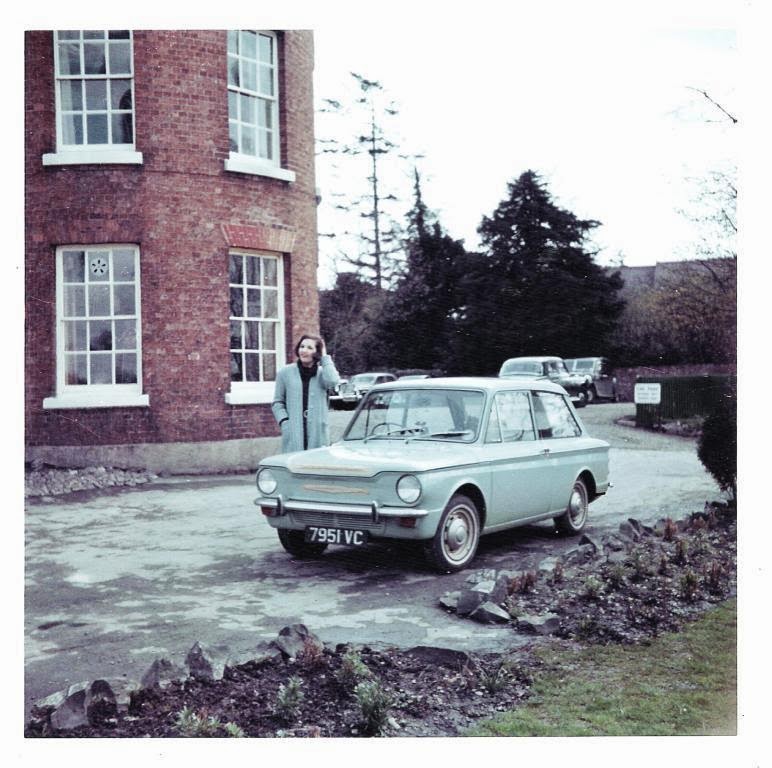
No Bristols please. Except for the BMW-based 400 and the beautiful 404 they were heavy and lugubrious. I never went for the mystique so assiduously promoted by writers like the matchless Leonard Setright. Triumph Stag? I thought it was rubbish when I went on the press launch. Hillman Imp? I owned one and when it went it was OK; I drove it to Maranello where I had lunch with Enzo Ferrari, but it was not made very well. Same goes for any Avenger, even the Avenger Tiger. The press launch was on Malta where we couldn’t drive them far enough to grow suspicious of unreliability. The Morgan 3 wheeler or Plus 4 were fine, but the Plus 8 was where Morgan began to lose its way and power outstripped handling. I wouldn’t include a Delorean in any list except perhaps one on how not to develop a sports car. It was terrible. Reliant Scimitar? A definite maybe. Triumph TR5 - not bad until they put a wiggly independent back-end on making it pitch and curtsy. Triumph 1300 absolutely not. And why relegate the MGA to 95th? ShameRange Rover. Deserves its place. Took this on the press launch by Goonhilly Down, 1970.
Love listsHillman Imp. On road test for The Motor with Penny Duckworth by door. Pre-launch picture so badges taped over.
100.Range Rover Evoque 99. Ginetta G40R 98. Vauxhall Astra 97. Marcos TSO 96. Honda Civic 95. MGA 94. Vauxhall Chevette HSR 93. Triumph Dolomite Sprint 92. Allard J2 91. Honda Jazz 90. Sunbeam Tiger 89. Nissan Juke 88. Invicta Black Prince 87. Noble M12 86. Lotus Carlton 85. Caterham Seven 160 84. Caparo T1 83. Rolls-Royce 10 HP 82. Triumph TR5 PI 81. Radical RXC 80. Triumph 1300 79. Daimler SP250 Dart 78. Morgan 4/4 77. Renault Megane RS 225 76. Noble M600 75. Lotus Sunbeam 74. Morgan Plus 8 73. BAC Mono 72. Gordon-Keeble 71. Austin-Healey Sprite 70. MGB GT 69. Bristol Fighter 68. Ford Cortina 1600E 67. Bowler EXR 66. AC Ace 65. Rolls-Royce Silver Shadow 64. Austin FX4 63. Napier-Railton 62. Caterham Supersport 61. Triumph 2000 60. Jaguar F-type 59. Morgan 3-wheeler 58. Reliant Scimitar 57. TVR Sagaris 56. Ford Escort RS2000 55. Bentley Continental GT 54. Ford Capri RS3100 53. Delorean DMC-12 52. Aston Martin V8 51. Ascari KZ1 50. Aston Martin V12 Vantage S 49. Subaru Impreza WRC 48. Hillman Avenger Tiger 47. Triumph Stag 46. Hillman Imp 45. Lister Storm 44. Rover P5B 43. Lotus Evora 42. Rover P6 3500S 41. Nissan Qashqai 40. Ariel Atom 39. Vauxhall Prince Henry 38. Aston Martin One-77 37. Rover 75 36. Jaguar XJ 35. Austin Seven 34. Bristol Blenheim 33. Lotus Cortina 32. Austin-Healey 3000 31. Aston Martin Vanquish 30. Lotus Seven 29. Land Rover 28. Jensen-Healey 27. Lotus Esprit 26. MG Midget 25. McLaren 12C 24. Morris Minor 23. Lotus Elan 22. TVR Speed 12 21. Rover SD1 20. TVR Chimaera 19. BMW Mini 18. Bentley Blower 17. Jaguar XF 16. Ford GT40 15. Rolls-Royce Phantom 14. Lotus Elise 13. Jaguar D-type 12. Ford Sierra RS Cosworth 11. Jensen FF 10. Ford Escort Mexico 9. TVR Griffith 8. Aston Martin DB5 7. Jaguar XJ220 6. McLaren P1 5. Yamaha MOTIV.e 4. Range Rover 3. Jaguar E-type 2. McLaren F1 1. original Mini
Works Austin-Healey 3000 rally car test. I am the fresh-faced youth.
McLaren F1 (above): Collected daughter Joanna from school during my road test. She’s older now, still beautiful.
Austin-Healey Sprite. 71st. This was my second one at Turnberry. Wonderfully crisp, precise car.Lotuses are questionable on grounds of quality and reliability but I’m surprised there is no Elan Plus2S. It was beautifully proportioned. I once did 300 miles in three hours with one. There you are the older I get the faster I was. I would not include any TVR; all I drove were just brute force and ignorance. Blower Bentleys were something of an aberration. I suppose they were glamorous but never won anything like the unsupercharged cars. Derby Bentleys are missing from the list. Surely the Silent Sports Car deserves better. Jensen-Healey – delete. Not well made, hastily modified and really quite dull. Same goes for the Daimler Dart SP250. The Edward Turner engine was ok but Daimler was so strapped for cash it had to cobble up a horrid plastic body that creaked and cracked.
One of my first drives in an E-type; Scottish Motor Show after introduction at Geneva in 1961 (below), with Jaguar apprentice Clive Martin.
No Bristols please. Except for the BMW-based 400 and the beautiful 404 they were heavy and lugubrious. I never went for the mystique so assiduously promoted by writers like the matchless Leonard Setright. Triumph Stag? I thought it was rubbish when I went on the press launch. Hillman Imp? I owned one and when it went it was OK; I drove it to Maranello where I had lunch with Enzo Ferrari, but it was not made very well. Same goes for any Avenger, even the Avenger Tiger. The press launch was on Malta where we couldn’t drive them far enough to grow suspicious of unreliability. The Morgan 3 wheeler or Plus 4 were fine, but the Plus 8 was where Morgan began to lose its way and power outstripped handling. I wouldn’t include a Delorean in any list except perhaps one on how not to develop a sports car. It was terrible. Reliant Scimitar? A definite maybe. Triumph TR5 - not bad until they put a wiggly independent back-end on making it pitch and curtsy. Triumph 1300 absolutely not. And why relegate the MGA to 95th? ShameRange Rover. Deserves its place. Took this on the press launch by Goonhilly Down, 1970.
Love listsHillman Imp. On road test for The Motor with Penny Duckworth by door. Pre-launch picture so badges taped over.
100.Range Rover Evoque 99. Ginetta G40R 98. Vauxhall Astra 97. Marcos TSO 96. Honda Civic 95. MGA 94. Vauxhall Chevette HSR 93. Triumph Dolomite Sprint 92. Allard J2 91. Honda Jazz 90. Sunbeam Tiger 89. Nissan Juke 88. Invicta Black Prince 87. Noble M12 86. Lotus Carlton 85. Caterham Seven 160 84. Caparo T1 83. Rolls-Royce 10 HP 82. Triumph TR5 PI 81. Radical RXC 80. Triumph 1300 79. Daimler SP250 Dart 78. Morgan 4/4 77. Renault Megane RS 225 76. Noble M600 75. Lotus Sunbeam 74. Morgan Plus 8 73. BAC Mono 72. Gordon-Keeble 71. Austin-Healey Sprite 70. MGB GT 69. Bristol Fighter 68. Ford Cortina 1600E 67. Bowler EXR 66. AC Ace 65. Rolls-Royce Silver Shadow 64. Austin FX4 63. Napier-Railton 62. Caterham Supersport 61. Triumph 2000 60. Jaguar F-type 59. Morgan 3-wheeler 58. Reliant Scimitar 57. TVR Sagaris 56. Ford Escort RS2000 55. Bentley Continental GT 54. Ford Capri RS3100 53. Delorean DMC-12 52. Aston Martin V8 51. Ascari KZ1 50. Aston Martin V12 Vantage S 49. Subaru Impreza WRC 48. Hillman Avenger Tiger 47. Triumph Stag 46. Hillman Imp 45. Lister Storm 44. Rover P5B 43. Lotus Evora 42. Rover P6 3500S 41. Nissan Qashqai 40. Ariel Atom 39. Vauxhall Prince Henry 38. Aston Martin One-77 37. Rover 75 36. Jaguar XJ 35. Austin Seven 34. Bristol Blenheim 33. Lotus Cortina 32. Austin-Healey 3000 31. Aston Martin Vanquish 30. Lotus Seven 29. Land Rover 28. Jensen-Healey 27. Lotus Esprit 26. MG Midget 25. McLaren 12C 24. Morris Minor 23. Lotus Elan 22. TVR Speed 12 21. Rover SD1 20. TVR Chimaera 19. BMW Mini 18. Bentley Blower 17. Jaguar XF 16. Ford GT40 15. Rolls-Royce Phantom 14. Lotus Elise 13. Jaguar D-type 12. Ford Sierra RS Cosworth 11. Jensen FF 10. Ford Escort Mexico 9. TVR Griffith 8. Aston Martin DB5 7. Jaguar XJ220 6. McLaren P1 5. Yamaha MOTIV.e 4. Range Rover 3. Jaguar E-type 2. McLaren F1 1. original Mini
Works Austin-Healey 3000 rally car test. I am the fresh-faced youth.
Monday, 15 April 2013
Skoda Octavia
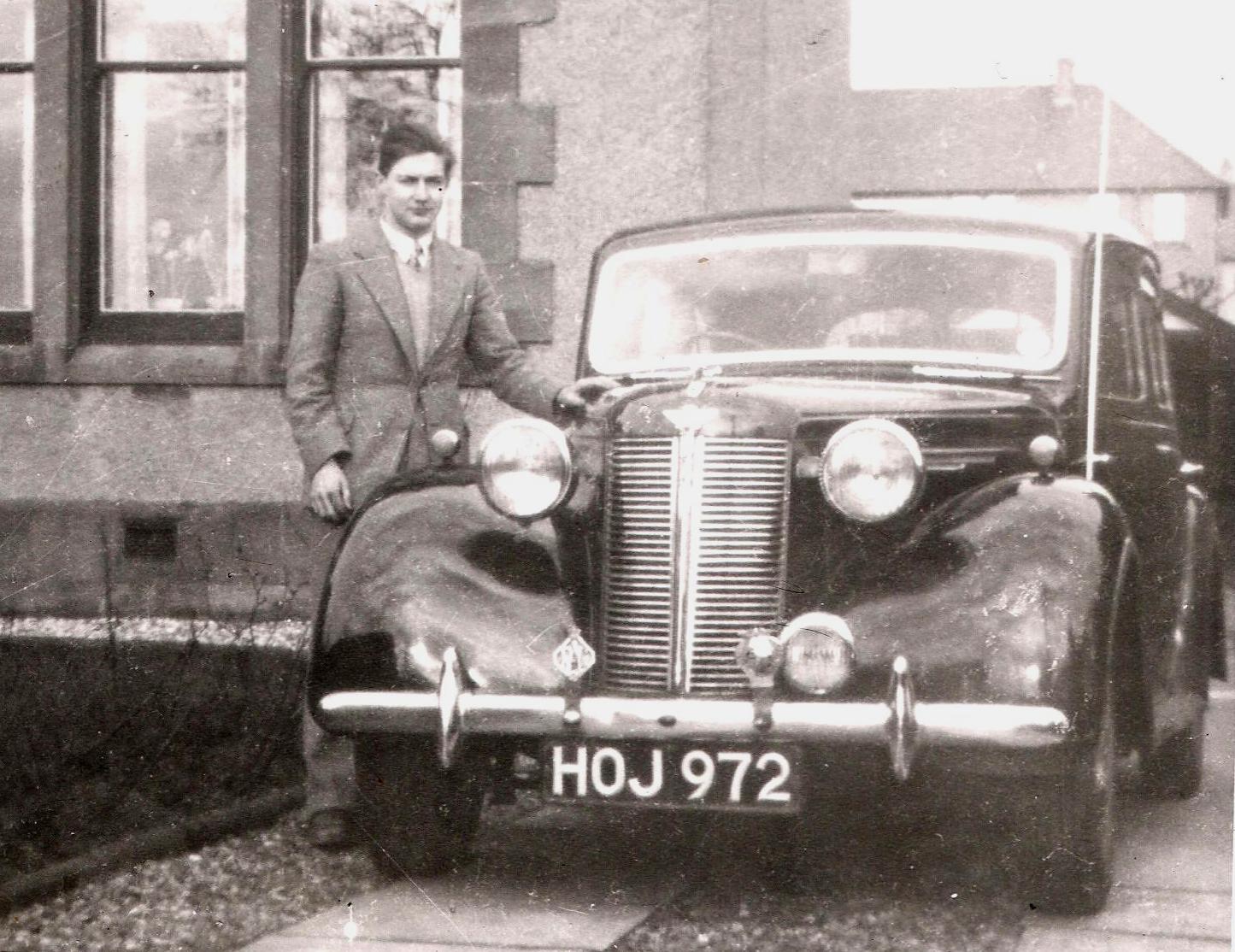
You can’t get away from class. We were a Wolseley family. The Vanden Plas Princess and the Armstrong Siddeley came later. We slipped downmarket with the Austin Sixteen in which I passed my driving test, but that was bought in 1948 or so, when cars were hard to come by. It was replaced by a Wolseley Six-Eighty. Not a notable success; its single ohc was unhappy with teenage over-revving but it looked classy with an upright radiator and wood facia. Wasn’t up to next-door’s Rover 14 maybe, but it was better than Austins, which were, by and large, bought by people who believed the Dependable slogan and were NQOC. Austins weren’t stylish but they were well made. Father was in steel and his metallurgist chums said Longbridge was fussy about the steel it was buying for gearboxes. He found that convincing.
Austin, Armstrong Siddeley, Vanden Plas and Wolseley; all, alas, gone. Yet class distinctions in cars remain. When I was road testing it helped make up your mind about cars once you had identified likely buyers - easy with BMWs. People who bought BMWs buyers got other BMW owners (like me) a bad name. Racy and aggressive they demanded cars that were fast and handled well. BMW buyers were fusspots so you set the road-holding bar higher for BMWs.


Ford buyers – difficult to avoid stereotyping. They were always cost-conscious high-mileage reps. Jaguar buyers went for style, refinement and prestige. They are no longer the same as the Jaguar buyers of our Wolseley years – Jaguars then were much too, well flashy really, like Uncle Bob, who had had Vauxhalls and then a black Jaguar with huge headlights and too much, so my mother thought, voluptuous curves and showy chrome.
Hyundai and Kia buyers now are connoisseurs of the long-distance warranty and born-again Austin buyers, looking for good metallurgy and unpretentious quality, buy Skodas. Dependable, regular, no nonsense solid worth, Skoda’s styling is derivative but the customers want it like that. Nothing radical; good proportions are more important than pretendy avant garde.

Skodas look modest just like Austins looked modest. They were styled by the unlikely Dick Burzi. Born in Buenos Aires, Ricardo Burzi joined Lancia in the 1920s. “Styling” was only beginning and he augmented his income drawing cartoons for newspapers, only to get into trouble for drawing some of the emerging Duce, Benito Mussolini. You couldn’t do that in Italy and Burzi had to flee.
Fortunately Vincenzo Lancia chanced to meet Herbert Austin on a liner, recommended him, and so the Italian-Argentinian joined Longbridge in 1929. His reponse to challenges proved variable. He was partly responsible for the splendid 1940s Sheerline and Princess, based on chief executive Leonard Lord’s Bentley, but he made 1945 Austins look like 1930s Chevrolets. His big solo effort, under instructions from Lord, was the ill-starred Austin A90 Atlantic.
Skoda (Octavia press launch above - my BMW behind) has avoided such flights of fancy. It knows its place, unlike the flagship VW Passat, which has got longer and sleeker. The cards in the Skoda pack have been shuffled, taking the Octavia a bit up-market and making it bigger, to accommodate the Rapid in a lower slot. Octavia is on VW’s MQB platform along with the Audi A3, Seat León and Mark 7 Golf and is temptingly priced at around £20,000, unless you specify lots of bells and whistles. It rides, handles and drives well. It isn’t fast, 11.5sec to 60mph, it is quite economical at about 45mpg without being super-frugal and qualifies as thoroughly worthy. Not faint praise for those old solid sensible dependable Austin customers.

Monday, 4 February 2013
Pedestrian Passengers
So, patsy hacks have tested the Jaguar F-type from the passenger’s seat. It really won't do. Jaguar’s step-by-step PR will be successful because there is so much interest in the car. Giles Smith of The Sunday Times and Jamie Merrill of the Independent on Sunday could scarcely say no to the invitation. “Come to the Gaydon test track,” it trilled, “you can look and ride in but not drive.” I had invitations to be driven by show-off test drivers and invariably turned them down. Sometimes a manufacturer didn’t want to risk a bad report. Sometimes it only had the one car. I would not imagine this applies at Jaguar. It just wants to raise awareness while production gets (maybe slowly) under way.
I went to the Gaydon test track in 1968 for British Leyland tests, principally for the Austin 3 Litre and the MGC. The Austin felt designed by the truck division, even though its code-name ADO61 made out it had come from the Austin Drawing Office. It rolled and wallowed on corners and was ungainly, badly proportioned and clumsy. Cash strapped Leyland couldn’t afford a fresh set of doors so it used those of the 1800. In fact almost the entire centre section was ADO17 except for a huge transmission tunnel. ADO17 was transverse-engined and front wheel drive. ADO61 had a 3 litre C-series 7-bearing engine in-line under the long bonnet, driving the rear wheels. It had independent suspension with trailing arms at the back and Hydrolastic interconnected springing. Self-levelling pressurised by an engine-driven pump added to the complication.
Poor Raymond Baxter, who had taken over as director of motoring publicity, had an impossible job. Lugubrious was all you could call it. BL introduced a Morris 1300 Mk2 and some Mini options at the same event, as well as the MGC. This suffered, like the 2 Litre and most BL creations of the time from understeer which, as the late Jeff Daniels who crops up in several of my pictures described it, “of a most determined kind”. I re-tested an outgoing MGC later, modified by University Motors, from which a lot of the understeer had been banished and it was not at all a bad car.
Neither the MG, billed as a replacement for the big Austin-Healey, not the Austin 3 Litre survived long. Symptomatic of BL indecision, the Austin was designed with twin headlamps, but pre-production focus groups thought the car so ugly they were replaced by the rectangular ones in my pictures. By the time production began the twins were reinstated. Three years and 10,100 cars later the awful Austin was quietly dropped, unmourned. A smart test driver at Gaydon might have been able to disguise the understeer. I drove it and was able to warn readers in time.
Monday, 1 November 2010
Škoda Superb Estate

It is not often you can endorse official fuel consumption figures. On a brim-to-brim test over nearly 400 miles, I came within a single mile per gallon of the Skoda Superb Estate’s combined 38.7mpg. Mostly motorways and dual carriageways, with a fair amount of Kent B-roads, it was an impressive return for a 1550kg (4317lb) spacious estate car keeping mostly although not obsessively to speed limits. The 1.8 TSI Elegance is smooth, quiet, roomy and at £23,550 restores the dignity Skoda enjoyed as a great industrial and armaments firm. It made cars in Edwardian times; fine sporting and luxury machines by Laurin & Klement. Restoration by the VW group restores it to world rank.

A Superb Estate could replace my faithful 4x4. It has space for the motoring dogs. A heavy duty tray for the 595l (21cuft) loading space costs £150. It is 1700l (60cuft) with the seats folded (they could go walkies; there is more room than any competitor). I could even have it with sophisticated Haldex four wheel drive, so clever it only drives all of the wheels some of the time and hardly ever all the wheels all of the time.

It makes up its mind which ones to turn, depending on circumstances. A cunning control unit counts up wheel speed, accelerator position, engine rpm and what the stability sensors say. If there is ten per cent slip it reacts within a single revolution, transmitting the requisite torque. On slippery going it consults the ABS, braking one front wheel while applying pull to the other.
This is relaxed economical six-speed tranquillity. Cruise control is included in the price along with Columbus touch screen satellite navigation, leather upholstery, which I could never do without, heated seats, different side air conditioning, buzzing parking sensors and clever detailing that includes an umbrella in the rear door.

Adaptive Front light System (AFS) also makes up its own mind, producing the right sort of beams for town, main roads or motorways. A rain mode reduces reflective glare, cornering lights point sideways and, amazingly, the driver can instruct the Maxidot computer to adjust the lights for left or right hand drive. No more black patches when you go to the ferry. The spread of brightness is superb. You don’t realise how effective and subtle it is, especially the swivelling beams, until you drive something else.
The Skoda Superb richly deserves the awards it has had. It is supremely confident, confers complete peace of mind. There is a bit of road noise and they say the diesels are not quiet even though they win prizes too. Yet it is so well made; the trim is carefully stitched and moulded, nothing has been skimped. The fit and finish would grace a BMW. It is an organised car that it is hard to fault. Elegance specification includes rear parking sensors, Bi-xenon headlights, chrome roof rails and a tyre pressure monitor making it a bargain in equipment. It may not have the emotional appeal of a BMW, a Jaguar, or a Mercedes-Benz yet Skoda is on the threshold of joining them among the classic European makes of car.
Thursday, 28 October 2010
Fiat 500 Twin Air
With a facia like a Roberts radio the Fiat 500 Twin Air raises retro to new frontiers. Italian engineers at the press launch this week could not resist congratulating themselves on a conspicuous success. It sips fuel by the teaspoonful and has the lowest exhaust emissions of any production petrol engine. Even climate-change sceptics can not gainsay free entry to the London Congestion Charge zone, with 95kg/km of CO2 from the exhaust.

Pert, pretty and engaging, Fiat 500s have form. Remember 13bhp. The first 500 of 1936, the Topolino or Mickey Mouse, had a 569cc side-valve 4-cylinder at the front driving the rear wheels, independent suspension by transverse leaf spring, weighed 535kg (1179lb) and did about 53mph and 45mpg. More than half a million were made. Recreated in 1957, the engine was changed to a 479cc overhead valve vertical twin, put at the back and shorn of a transmission shaft its weight was reduced to 470kg (1035lb). It still gave only13bhp so it didn’t go much faster but it used less fuel; 50mpg against about 47mpg.
Like VW, with the born-again Beetle, the 4-cylinder retro-styled Fiat 500 of July 2007 shifted the engine to the front again, driving the front wheels. Safety equipment and crash protection made it heavier and now we have another vertical twin with a chain drive ohc to 4-valve heads. It is now 900kg (1984lb) but this little jewel of a car has a turbocharger, and with 85bhp and five gears will do 108mph and, on the extra-urban cycle, 76.5mpg.

At 60mph the new Twin Air burbles along at a restful 2,500rpm in fifth. Dr Lanchester’s clever balancer shaft hasn’t quite smoothed out the beat of the two cylinder engine but it is not an unpleasant buzz. You can’t call it swift at 11sec to 60mph and the gearshift is a bit woolly but what a little charmer. People smiled at in picturesque Berkshire, where the local authorities are speed camera-mad, obsessed with chicanes, road humps and so-called traffic-calming, outdated and largely discredited safety measures, which must do little for the residents’ peace of mind.
Veteran Fiat PR Peter Newton runs well-organised, informative launches, packed with information. Based at the splendid Forbury Hotel, cheek by jowl with Reading Gaol, well worth a Ballad.
The heart of rual autumnal Berkshire
Thursday, 22 July 2010
BMW X1
Road testing cars for The Motor used to be objective. “Put yourself in the mind of a buyer,” they told you. It wasn’t a bad rule, ignored now by self important hacks who tell you what they think. Their experience can be sketchy. Mine was once.
It’s not always easy pretending to be a buyer, so I am being one. I am shopping for a replacement for the Terrano. Not just yet maybe. I bought it because I thought it would last a long time. In 12 years it has only done 70,000 miles because it I mostly drive other people’s cars. It could last a lifetime. It has been the most reliable car I have ever had.
The Terrano may be noisy but it is strong. I got it to pull number two daughter’s horsebox. No longer a cute teenager, more a yummy mummy, she is very green. She and Adam will borrow it for a holiday. Grand-Teddy will be safer in the big Terrano than in their little Clio. It may not go with her greenery unless she counts it recycled, which saves the planet making another one.
While I am making up my mind I can test cars subjectively. I can be myself. No more mealy mouthed objectivity. Here’s what I really think. A BMW X1 would be nice. It would pair up with my Z3 (see above). UK X1s are all diesels, which is fine; I like diesels. And I would want an automatic that is agreeably smooth and quiet with plenty of torque for overtaking. So far so good. The X1’s accommodation is fine and in theory would fill the bill, but the cheapest is £23,000. Four wheel drive, Sat-nav and leather upholstery lifts it into 3-series territory close to £30,000. It has 3-series underpinnings although 1.5cm narrower, there is not much room in the back and not enough for the dogs in the boot.
I didn’t find the steering crisp enough and the ride is turbulent. The wheels bump thump into potholes and steep cambers throw it off course. The inside is gloomy. It may be good quality stuff but is a bit severe I do like some luxury trim.
You spend a long time looking at the facia and it may be businesslike and efficient but it’s dull. The X1 is well proportioned from the side but upright and abrupt in front.
Road performance is exemplary. The X1 whisks along quietly, the 6-speed gearbox shifts seamlessly, it does 45-50mpg, so the 61litre (13.4gallon) tank would take you half the length of the realm, which I like. So, the X1 is worthy but not, I think, for me. BMWs should have charisma and this hasn’t. I suppose I am really looking for an estate car, 4x4 not really necessary in Lincolnshire, good ride essential, road noise unacceptable, probably diesel automatic with space for two Labradors.
Wednesday, 11 November 2009
JAGUAR XF
2010 JAGUAR 3.0 Diesel Portfolio


So Jaguar, it seems, was beleaguered the year the Berlin Wall came down. The XJ220 did not come out quite like the one I described in The Sunday Times on 10 December 1989. This was the year classic car prices peaked and convinced they were going to go on increasing, like art treasures, dealers were in a frenzy. I watched one sell a car in an afternoon, for £3,000 more than he had paid for it that morning. In the end all they were doing was selling cars to other dealers, only to discover that there were not enough “speculators” to go round, and the bubble burst. Even sober firms like Jaguar were tempted to join in, however, by the time the XJ220 got into production, with a turbocharged V6 instead of a V12, the price had gone up to £290,000. There was talk of a production run of 350 but only 280 were ever made. 
Jaguar is still a bit beleaguered. Ford ownership came and went. The idea that it could go into the volume business against BMW and Mercedes-Benz came and went as well. Now it wants to compete at the premium end of the market with Porsche, all a bit of a change from when Jaguar challenged keenly on value, putting Armstrong Siddeley, Alvis and others completely out of the luxury car business. The answer to “How do they do it at the price?” was by reducing overheads; Sir William Lyons imposed strict control. Only the topmost executives actually got a Jaguar with the job. The Browns Lane car park was full of Ford Prefects and Hillman Minxes.
I have been driving the 2010 XF 3.0 diesel Portfolio at £41,500, half the price of a Porsche Panamera, but in driving quality surely a match. Swift, smooth, quiet, refined, Jaguar has long mastered the bugbear of so many competitors, road noise. Ruth thought there was a bit of rustle from the wind at motorway speeds but that was only because everything else is so quiet. Jaguars have been superior 
The XF’s little ceremony when you press Start is engaging. The gear selector rises obediently out of the console, the air vents swing open, the facia display lights up and you feel at once in control. It is a bit of whimsy, yet part of a policy of lifting Jaguar into the 21st century after the misapprehension that customers wanted Jaguars to look the way Jaguars used to look. This did not give the engineering much chance to shine and I suppose that build quality and exclusiveness now compensates for the old bargain prices. 
How astonishing that the E-type was introduced (inflation notwithstanding) for a basic £1550, or £2200 with tax. The XF’s naught to sixty in less than 7 seconds and top speed of 150 is about the same as an E-type, although not much else is remotely similar. The E-type did about 18mpg, the XF 42. The fuel tank size is about the same, 14 gallons against the XF’s 15.3, which gives the large 5-seater a range of 643 miles against the 2-seater’s 250.
If it keeps making cars like this, Jaguar will lift the beleaguredship.


So Jaguar, it seems, was beleaguered the year the Berlin Wall came down. The XJ220 did not come out quite like the one I described in The Sunday Times on 10 December 1989. This was the year classic car prices peaked and convinced they were going to go on increasing, like art treasures, dealers were in a frenzy. I watched one sell a car in an afternoon, for £3,000 more than he had paid for it that morning. In the end all they were doing was selling cars to other dealers, only to discover that there were not enough “speculators” to go round, and the bubble burst. Even sober firms like Jaguar were tempted to join in, however, by the time the XJ220 got into production, with a turbocharged V6 instead of a V12, the price had gone up to £290,000. There was talk of a production run of 350 but only 280 were ever made.

Jaguar is still a bit beleaguered. Ford ownership came and went. The idea that it could go into the volume business against BMW and Mercedes-Benz came and went as well. Now it wants to compete at the premium end of the market with Porsche, all a bit of a change from when Jaguar challenged keenly on value, putting Armstrong Siddeley, Alvis and others completely out of the luxury car business. The answer to “How do they do it at the price?” was by reducing overheads; Sir William Lyons imposed strict control. Only the topmost executives actually got a Jaguar with the job. The Browns Lane car park was full of Ford Prefects and Hillman Minxes.
I have been driving the 2010 XF 3.0 diesel Portfolio at £41,500, half the price of a Porsche Panamera, but in driving quality surely a match. Swift, smooth, quiet, refined, Jaguar has long mastered the bugbear of so many competitors, road noise. Ruth thought there was a bit of rustle from the wind at motorway speeds but that was only because everything else is so quiet. Jaguars have been superior

The XF’s little ceremony when you press Start is engaging. The gear selector rises obediently out of the console, the air vents swing open, the facia display lights up and you feel at once in control. It is a bit of whimsy, yet part of a policy of lifting Jaguar into the 21st century after the misapprehension that customers wanted Jaguars to look the way Jaguars used to look. This did not give the engineering much chance to shine and I suppose that build quality and exclusiveness now compensates for the old bargain prices.

How astonishing that the E-type was introduced (inflation notwithstanding) for a basic £1550, or £2200 with tax. The XF’s naught to sixty in less than 7 seconds and top speed of 150 is about the same as an E-type, although not much else is remotely similar. The E-type did about 18mpg, the XF 42. The fuel tank size is about the same, 14 gallons against the XF’s 15.3, which gives the large 5-seater a range of 643 miles against the 2-seater’s 250.
If it keeps making cars like this, Jaguar will lift the beleaguredship.

Friday, 2 October 2009
VW Polo 1.2SE

VOLKSWAGEN POLO 1.2SE
Road tests in The Motor were essentially compiled by committee, although an author, by tradition anonymous, was responsible for drawing opinions together. This cloak of secrecy was set aside when Roger Bell, who wrote a less than flattering appraisal of the Mark X Jaguar, was hauled up before the management at Browns Lane to explain himself. Editor Richard Bensted-Smith had to make a contrite explanation although Roger, skilled and articulate, was perfectly capable of speaking for himself. His views were not only those of the entire team, they have been endorsed by experience.
The road test staff comprised the technical editor, Joe Lowrey, Charles Bulmer, Roger Bell and me. We were joined by Michael Bowler and Cyril Posthumus and worked from time to time with John Anstice-Brown, and the marvellously erudite Laurence Pomeroy. Generous, amusing and never patronising, Pom was occasionally theatrical yet one hung on his every word.
The principles of road testing at The Motor were carefully drawn. Cars were assessed from the point of view of a likely buyer. Personal prejudices were disallowed. We individuals preferred fast cars, slow ones bored us, but authors were prohibited from reflecting such narrow-mindedness. Objectivity was crucial. Some readers actively disliked fast cars and we had to take them into account. You described a car rather than set yourself up as a critic, we were compiling tests for likely buyers so we had to think as likely buyers and not young tearaways.
Judging by tyre-smoking pictures and jargon from racing drivers manqué it’s not like that now. I reflected how testing has changed when I was at the wheel of a 1.2 litre Volkswagen Polo SE this week. It is now safe to reveal that I was author of The Motor road test of another 1.2 litre Volkswagen in 1963, in which: “Cornering is accomplished with little roll but a certain apprehension as initial understeer gives way to a decided oversteer as the 41/59 weight distribution and swing axle rear suspension assert themelves.” This described the handling without exactly saying whether we liked it or not. The conclusion was perfectly clear. “Although economical the performance is poor for a 1200 and it is seriously affected by adverse conditions like a strong wind or a heavy load. Handling is suspect on account of oversteer, which asserts itself abruptly.” Nothing mealy-mouthed there.
What strides cars have made in 46 years. Top speed of my 1963 Beetle was 70mph, fuel consumption 26mpg, although we always included a “Touring” consumption, calculated from the steady-speed tests, since it took less account of the test staff’s fast driving. The VW’s was 42.75 (6.6l/100km) reflecting high gearing and low rpm. Maximum power of 34bhp (25.35kW) came in at only 3,600rpm, “at which the piston speed was only 1,510 ft per minute.” Pom was very big on piston speed.
The clever little Polo gives 69bhp (70PS) (51.48kW) at 5400rpm representing some 3,080 ft per minute, about twice what Pom would regard as acceptable. The difference is that the Polo is going 30mph faster, its little 3-cylinder engine spinning smoothly and faultlessly to give a combined mpg of 51.4 (5.49l/100km). The quality of VW finish and engineering has never wavered since the Beetle, and even though the Polo takes 14sec to reach 60mph, or about 4 sec less than the Beetle took to reach 50, it does not feel slow.
Putting myself in the shoes of likely buyers, they would surely approve.
I tried the diesel 1.6 TDI. It has a few extra horse power and a fourth cylinder, is just about as fast and should give 65.7mpg (4.3l/100km) but likely buyers might not enjoy it as much as the swifter-feeling petrol car.
Road tests in The Motor were essentially compiled by committee, although an author, by tradition anonymous, was responsible for drawing opinions together. This cloak of secrecy was set aside when Roger Bell, who wrote a less than flattering appraisal of the Mark X Jaguar, was hauled up before the management at Browns Lane to explain himself. Editor Richard Bensted-Smith had to make a contrite explanation although Roger, skilled and articulate, was perfectly capable of speaking for himself. His views were not only those of the entire team, they have been endorsed by experience.
The road test staff comprised the technical editor, Joe Lowrey, Charles Bulmer, Roger Bell and me. We were joined by Michael Bowler and Cyril Posthumus and worked from time to time with John Anstice-Brown, and the marvellously erudite Laurence Pomeroy. Generous, amusing and never patronising, Pom was occasionally theatrical yet one hung on his every word.
The principles of road testing at The Motor were carefully drawn. Cars were assessed from the point of view of a likely buyer. Personal prejudices were disallowed. We individuals preferred fast cars, slow ones bored us, but authors were prohibited from reflecting such narrow-mindedness. Objectivity was crucial. Some readers actively disliked fast cars and we had to take them into account. You described a car rather than set yourself up as a critic, we were compiling tests for likely buyers so we had to think as likely buyers and not young tearaways.
Judging by tyre-smoking pictures and jargon from racing drivers manqué it’s not like that now. I reflected how testing has changed when I was at the wheel of a 1.2 litre Volkswagen Polo SE this week. It is now safe to reveal that I was author of The Motor road test of another 1.2 litre Volkswagen in 1963, in which: “Cornering is accomplished with little roll but a certain apprehension as initial understeer gives way to a decided oversteer as the 41/59 weight distribution and swing axle rear suspension assert themelves.” This described the handling without exactly saying whether we liked it or not. The conclusion was perfectly clear. “Although economical the performance is poor for a 1200 and it is seriously affected by adverse conditions like a strong wind or a heavy load. Handling is suspect on account of oversteer, which asserts itself abruptly.” Nothing mealy-mouthed there.
What strides cars have made in 46 years. Top speed of my 1963 Beetle was 70mph, fuel consumption 26mpg, although we always included a “Touring” consumption, calculated from the steady-speed tests, since it took less account of the test staff’s fast driving. The VW’s was 42.75 (6.6l/100km) reflecting high gearing and low rpm. Maximum power of 34bhp (25.35kW) came in at only 3,600rpm, “at which the piston speed was only 1,510 ft per minute.” Pom was very big on piston speed.
The clever little Polo gives 69bhp (70PS) (51.48kW) at 5400rpm representing some 3,080 ft per minute, about twice what Pom would regard as acceptable. The difference is that the Polo is going 30mph faster, its little 3-cylinder engine spinning smoothly and faultlessly to give a combined mpg of 51.4 (5.49l/100km). The quality of VW finish and engineering has never wavered since the Beetle, and even though the Polo takes 14sec to reach 60mph, or about 4 sec less than the Beetle took to reach 50, it does not feel slow.
Putting myself in the shoes of likely buyers, they would surely approve.
I tried the diesel 1.6 TDI. It has a few extra horse power and a fourth cylinder, is just about as fast and should give 65.7mpg (4.3l/100km) but likely buyers might not enjoy it as much as the swifter-feeling petrol car.

Subscribe to:
Posts (Atom)


.jpg)