They are trying to change the rules for “official” fuel consumptions. Like the recent yes-no diesel fiasco it’s another example of a politicians’ fix. They created what they thought was an equable system, then discovered they really didn’t know what they were doing. As a road tester I found out how difficult it was to measure fuel consumption accurately. Frugal little saloons gulped fuel driven fast. Gas-guzzlers were surprisingly economical going slowly.
In the 1970s legislators decreed that manufacturers had been telling lies. A formula for working out fuel consumption was no easier for an official mind to work out than mine had been. A single mpg wouldn’t do. There had to be one at a steady slow speed, one at a steady motorway speed and one in traffic. It never worked very well. A slow-speed fuel-sipper could be a gushing drain going fast. Low-geared economy cars could be disappointing in town. A high-geared one could flatter only to deceive on the open road. Introducing Urban Cycle and Extra-Urban Cycle didn’t help much.
Even officials admit the figures are obtained under specific test conditions, “…and may not be achieved in ‘real life’ driving. A range of factors influence actual fuel consumption, driving style and behaviour, as well as the environment. Different variants or versions of one model are grouped together so the figures should be treated as indicative only.”
Averaging out the figures didn’t help. Last year testers were discovered taping up car doors and windows and driving on artificially smooth surfaces to gain a drop in “official” CO2 emissions, linked with fuel consumptions. Now, according to an anonymous EU official who blabbed to Automotive News, proposals for “a new real-world testing method,” are expected this year.

Showing posts with label Environmental. Show all posts
Showing posts with label Environmental. Show all posts
Friday, 22 August 2014


Friday, 15 August 2014
Doubts on Diesels

It was so predictable. It’s not simply that politicians are self-serving, we can all be self-serving, but they just look so stupid. There seemed to be votes in going along with diesels in the 1990s when they could sell them on the back of “environmental” opinion. They may even have thought they were doing the “right” thing. People voting for them maybe believed it too. We in the media told them, quite often as it happens 25-30 years ago, that they were barking up a wrong tree. I liked diesels. They didn’t need sparks and electricity, which always gave trouble in the cars I could afford but they were never clean. Diesel was a byword for soot and smoke.

The “greenhouse effect” had been scary for years. In the 1960s I suppose, I had read a cautionary paper about it written by somebody I respected. I half-believed in it myself. There were motor industry people I trusted who apparently believed in it as well. I felt obliged to take it seriously and it was years before it became apparent that it was the greatest scientific fraud in the history of the planet.

Dr Thomas Weber was a member of the Board of Management of Daimler AG, and responsible for Group Research & Mercedes-Benz cars’ development. He told me Daimler was spending €4.4 billion every year guessing what wheeze the politicians would decide on next. Throughout Europe they were obsessed with climate change or safety or whatever cause celebre lobbyists were coming up with.
And now, with diesels, they have changed their mind. Why am I not surprised?
Pictures (top): Not a diesel 1. 1940 BMW 328, tall 2 litre with three downdraught carburettors. OZ80 on cam cover denotes racing engine of Mille Miglia car I drove on Scottish event. (right)
First production diesel car, Mercedes-Benz 260D 1936-1939. (left) And its engine. (Below) Not a diesel 2 Mercedes-Benz test track, Unterturkheim, not as scary as it looks, I drove identical car here with test driver instructing precisely on speed and place on the banking.
.jpg)
Tuesday, 4 June 2013
Delingpole on soapbox
James Delingpole’s blog is right about everything and today’s, following Ed Davey’s stupid speech about climate, is no exception. I can do no better than quote. “Here,” Delingpole says, “We have a minister of the crown reproducing a string of complete untruths at a deeply discredited, eye-wateringly expensive, taxpayer-funded rip-off institution long past its sell-by date (that'll be you, Met Office) as a desperate and cynical measure to try to push through an Energy Bill guaranteed to make every household in Britain considerably poorer, to make energy more ruinously expensive, to make British business less competitive, and to ruin our landscape with even more bat-chomping, bird-slicing eco-crucifixes.
“Ed Davey is a disgrace and an embarrassment – by some way (and it's not like there's any shortage of competition) the most damaging and dangerous minister in Cameron's Coalition of the useless. Why is he not being called to account for this farrago of nonsense? Why aren't the true Conservatives in the Coalition demanding that he be sacked? How can any government which genuinely cares about the state of our economy, our countryside and people's falling standards of living allow this anti-scientific, green ideological nonsense to hijack the political agenda?”
What will it take, I wonder, to convince the powers-that-were to cease this ruinous charade, pretending we can manipulate the weather? Politicians used to set up small wars to take our mind off taxes and their self-serving projects. Now they create a department of climate change. Canute knew better. He sat on the beach only to convince his nobles that the tide waited for no man.
Ah. Soapboxes. This Beatles-inspired yellow submarine, a police car and a black cab are making ready for the Red Bull Soapbox race at Alexandra Palace on 14 July. Apparently each took three weeks to make from BMX bicycle wheels, plywood, polystyrene and cardboard tubing. The covering is plastazote foam, the number plates vinyl.
It is nine years since the last soapbox race and 70 of the human-powered machines will compete. Winners will be assessed on speed, creativity and how much they please the crowds. Red Bull Soapbox Race 2013 is at Alexandra Palace on Sunday 14 July to book your £5 ticket visit www.redbullsoapboxrace.co.uk. It will be £5 better spent than the billions wasted in Ed Davey’s grotesque and wasteful vanity projects.
“Ed Davey is a disgrace and an embarrassment – by some way (and it's not like there's any shortage of competition) the most damaging and dangerous minister in Cameron's Coalition of the useless. Why is he not being called to account for this farrago of nonsense? Why aren't the true Conservatives in the Coalition demanding that he be sacked? How can any government which genuinely cares about the state of our economy, our countryside and people's falling standards of living allow this anti-scientific, green ideological nonsense to hijack the political agenda?”
What will it take, I wonder, to convince the powers-that-were to cease this ruinous charade, pretending we can manipulate the weather? Politicians used to set up small wars to take our mind off taxes and their self-serving projects. Now they create a department of climate change. Canute knew better. He sat on the beach only to convince his nobles that the tide waited for no man.

Ah. Soapboxes. This Beatles-inspired yellow submarine, a police car and a black cab are making ready for the Red Bull Soapbox race at Alexandra Palace on 14 July. Apparently each took three weeks to make from BMX bicycle wheels, plywood, polystyrene and cardboard tubing. The covering is plastazote foam, the number plates vinyl.
It is nine years since the last soapbox race and 70 of the human-powered machines will compete. Winners will be assessed on speed, creativity and how much they please the crowds. Red Bull Soapbox Race 2013 is at Alexandra Palace on Sunday 14 July to book your £5 ticket visit www.redbullsoapboxrace.co.uk. It will be £5 better spent than the billions wasted in Ed Davey’s grotesque and wasteful vanity projects.
Tuesday, 28 May 2013
Jargon
 A “Growth Partnership Company (which) works in collaboration with clients to leverage visionary innovation that addresses the global challenges and related growth opportunities that will make or break today's market participants,” makes me suspicious. It “supports clients by addressing these opportunities and incorporating two key elements driving visionary innovation: The Integrated Value Proposition and The Partnership Infrastructure. (This) provides support to our clients throughout all phases of their journey to visionary innovation including: research, analysis, strategy, vision, innovation and implementation. (It) is entirely unique as it constructs the foundation upon which visionary innovation becomes possible. This includes our 360 degree research, comprehensive industry coverage, career best practices as well as our global footprint of more than 40 offices. For more than 50 years, we have been developing growth strategies for the global 1000, emerging businesses, the public sector and the investment community. Is your organization prepared for the next profound wave of industry convergence, disruptive technologies, increasing competitive intensity, Mega Trends, breakthrough best practices, changing customer dynamics and emerging economies?”
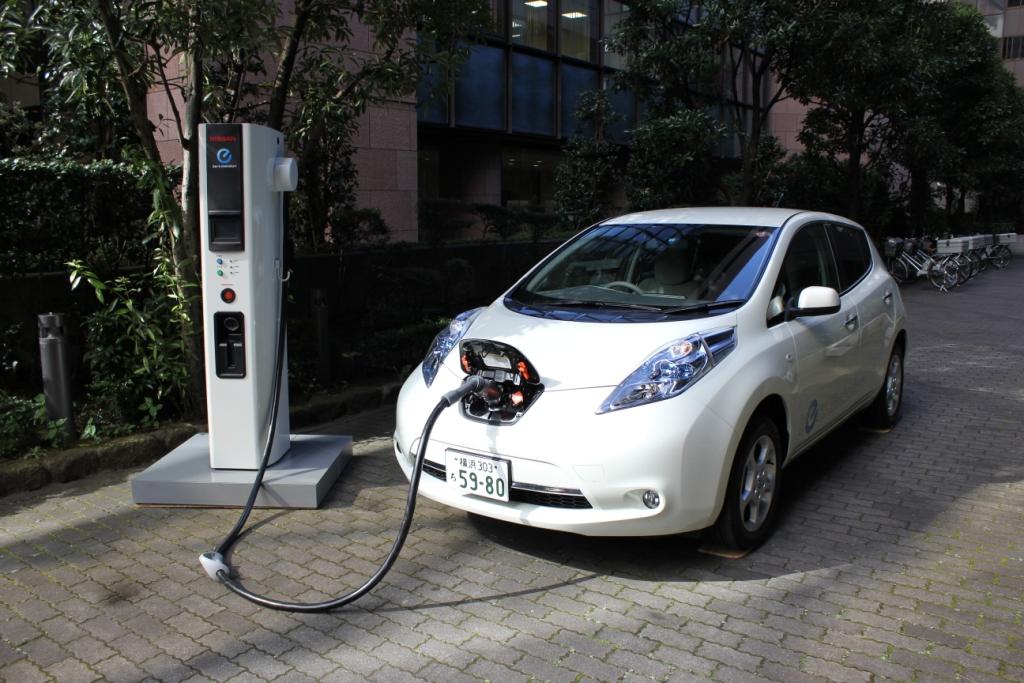
How do they expect to be taken seriously with such cliché-ridden verbiage? It almost goes without saying that it’s an agency engaged on selling us electric car stuff. It claims “the European Electric Vehicle Charging Infrastructure Market is Becoming Increasingly Self Sustaining. Market to be bolstered by improved strategic access to charging stations and development of robust business models. The electric vehicle (EV) charging industry in Europe is in the midst of transformation, with the focus on ramping up EV charging infrastructure for the rapidly expanding EV market. Significant growth is on the cards as participants from various verticals such as industrial automation, utilities, parking operators and infrastructure operators enter the fray. This development is also set to help the EV market wean itself off government subsidies and incentives, while becoming increasingly self-sustaining.”

“I have seen the future, and it works,” trilled American journalist and social activist Lincoln Steffens (1866-1936). He had been to Russia in 1919 and the Revolution was still new. Many dotty luminaries followed, persuaded by Soviet minders that collectivism was a success, fulfilling their Fabian visions.
Well, Russia was not the future. It didn’t work.
Idealists only want their prejudices approved and electric car enthusiasts who only think that after a bit of research the battery “problem” will be solved are as deluded as the promoters of the electric car vehicle charging infrastructure. I’ve lost count of the Great Electric Car initiatives that have come and gone. Some have failed expensively and publicly once their glib opportunistic entrepreneurs have soaked up subsidies and investments by stupid governments and Greenie authorities.
“New analysis, Strategic Technology and Market Analysis of Electric Vehicle Charging Infrastructure in Europe, finds that the market for EV charging stations is expected to grow rapidly from 7,250 charging stations in 2012 to over 3.1 million by 2019 at a compound annual growth rate (CAGR) of 113.3 per cent over the period 2012-2019. France, Germany, Norway and the United Kingdom are expected to lead the market due to the high adoption rates of EVs in these countries. The availability of charging infrastructure plays a vital role in ensuring that EVs maintain their growth momentum. This, in turn, means easy access to charging stations to eliminate range anxiety and ensure that EV users have the freedom to drive for longer periods of time.”
I won’t bother you with the identity of the growth partnership purveyor. It wasn’t Elektromotive, whose charging stations are featured in the pictures. Search 360 degree, comprehensive industry coverage, career best practices, global footprint.

I see the “annual” London to Brighton electric car challenge has been cancelled.
Wednesday, 20 February 2013
Hyper
Spin doctors and politicians – they are practically interchangeable. With such media hype it’s a wonder we ever get to the truth. Patrick McLoughlin the transport secretary told Sky News yesterday that electric cars were “fantastic”. Nobody contradicted him. Nobody said, “Get a life. It’s not true. It is a myth invented by greenies and political fellow-travellers. Electric cars are dead.”
He claimed: “They’re not town cars at all. They are fantastic cars; they’re built to a very high specification. Take one out and drive it.” Patrick McLoughlin aka Jim Hacker. Yes Minister was no comedy. It was a real life documentary. McLoughlin will be at the Ministry this morning making sure Sir Humphrey saw him on television, announcing a £37 million giveaway for plug-in chargers in homes, streets and railway stations.
The minister trumpeted that people would be increasingly attracted to electric cars, because charging batteries at home would be cheaper and faster than buying fuel at a filling station. What claptrap. He admitted confidence in electric cars would take time but the same was true of unleaded petrol.
“Buying a car is expensive, but I think if you look at the overall time and money you save by not having to put fuel in them, they are very serious competitors,” he said. “I’m pretty sure there will be a market. It’s a lot cleaner technology as well.” Who spun him all this rubbish? We have been listening to such bleats for a quarter of a century and there are still only a handful of electric cars.
He was careful to backtrack on numbers, “I’m not going to make a prediction of exactly how many cars are going to be on the roads or whether they’ll be electric or petrol. It’ll take a while to get the confidence about battery life. But it’s coming. They are fantastic developments and fantastic achievements by companies operating in Britain and being built by British engineers.”
Poor McLoughlin. He warbled on that since Nissan and Toyota are investing “huge amounts of money” in electric vehicles they would not be doing so if they did not believe a potential market existed. He obviously had no idea a Prius is a hybrid, and nobody told him Toyota has just scrapped plans for an electric minicar. Toyota said it had misread the market, didn’t believe battery technology was up to it and will go for hydrogen instead.
He claimed: “They’re not town cars at all. They are fantastic cars; they’re built to a very high specification. Take one out and drive it.” Patrick McLoughlin aka Jim Hacker. Yes Minister was no comedy. It was a real life documentary. McLoughlin will be at the Ministry this morning making sure Sir Humphrey saw him on television, announcing a £37 million giveaway for plug-in chargers in homes, streets and railway stations.
The minister trumpeted that people would be increasingly attracted to electric cars, because charging batteries at home would be cheaper and faster than buying fuel at a filling station. What claptrap. He admitted confidence in electric cars would take time but the same was true of unleaded petrol.
“Buying a car is expensive, but I think if you look at the overall time and money you save by not having to put fuel in them, they are very serious competitors,” he said. “I’m pretty sure there will be a market. It’s a lot cleaner technology as well.” Who spun him all this rubbish? We have been listening to such bleats for a quarter of a century and there are still only a handful of electric cars.
He was careful to backtrack on numbers, “I’m not going to make a prediction of exactly how many cars are going to be on the roads or whether they’ll be electric or petrol. It’ll take a while to get the confidence about battery life. But it’s coming. They are fantastic developments and fantastic achievements by companies operating in Britain and being built by British engineers.”
Poor McLoughlin. He warbled on that since Nissan and Toyota are investing “huge amounts of money” in electric vehicles they would not be doing so if they did not believe a potential market existed. He obviously had no idea a Prius is a hybrid, and nobody told him Toyota has just scrapped plans for an electric minicar. Toyota said it had misread the market, didn’t believe battery technology was up to it and will go for hydrogen instead.
Tuesday, 15 January 2013
More weather
A Met Office crying wolf, flinging about yellow warnings like so many yellow cards, risks not being believed in emergencies. So obsessed with charges for not issuing cautions, forecasters now shower them like confetti. Averse to complaints by floodees or drivers who can’t tell it’s cold enough for ice, there is now a veritable rainbow of alerts, so that nobody can claim, “We didn’t know.” Five inches of snow were expected in Lincolnshire and hazardous conditions yesterday. We had a flurry or two but nothing to worry about.
Like the Ruritanian shepherd boy who liked to shout alarm, the Met Office should remember that when wolves do come, nobody pays attention and sheep perish.

Last year in Lincolnshire. We had real snow.
We have always been interested in weather but we haven’t always been scared of it. I blame attention-seeking climate-obsessives on television. “Gale Force Winds” sound more serious than “Gales”. Talk of “Blizzard” or “White-out” gains more attention than “snow”. Never mind the closures of airports with snowfalls their Canadian counterparts would laugh off, or frozen points paralysing railways, forecasters are terrified of writs, real or imagined, from compensation seekers.
As with the unfortunate Italian earthquake scientists, now serving six years for manslaughter after failing to predict the tremor at L’Aquila when 309 people died, there is little sense in it. Samuel Croxall (c.1690 - 1752) Anglican churchman, writer and translator noted for his edition of Aesop’s Fables, summed it up with a question on political alarmism, of which we should be as much aware in our time as he was in his: "When alarmed with imaginary dangers in respect of the public, till the cry grows quite stale and threadbare, how can it be expected we should know when to guard ourselves against real ones?"
Like the Ruritanian shepherd boy who liked to shout alarm, the Met Office should remember that when wolves do come, nobody pays attention and sheep perish.

Last year in Lincolnshire. We had real snow.
We have always been interested in weather but we haven’t always been scared of it. I blame attention-seeking climate-obsessives on television. “Gale Force Winds” sound more serious than “Gales”. Talk of “Blizzard” or “White-out” gains more attention than “snow”. Never mind the closures of airports with snowfalls their Canadian counterparts would laugh off, or frozen points paralysing railways, forecasters are terrified of writs, real or imagined, from compensation seekers.
As with the unfortunate Italian earthquake scientists, now serving six years for manslaughter after failing to predict the tremor at L’Aquila when 309 people died, there is little sense in it. Samuel Croxall (c.1690 - 1752) Anglican churchman, writer and translator noted for his edition of Aesop’s Fables, summed it up with a question on political alarmism, of which we should be as much aware in our time as he was in his: "When alarmed with imaginary dangers in respect of the public, till the cry grows quite stale and threadbare, how can it be expected we should know when to guard ourselves against real ones?"
Monday, 14 January 2013
Global Warming ends
Don’t mention global warming. Family taboo. Yet the blogosphere buzzes with its obituary. The matchless Christopher Booker on Sunday drew attention to, “The graph the Met Office didn’t want you to see… Last week it didn’t take long for the bush fires set off by Australia’s ‘hottest summer ever’ to be blamed on runaway global warming. Less attention was given to heavy snow in Jerusalem (worst for 20 years) or the abnormal cold bringing death and destruction to China (worst for 30 years), northern India (coldest for 77 years) and Alaska, with average temperatures down in the past decade by more than a degree. But another story, which did attract coverage across the world, was the latest in a seemingly endless series of embarrassments for the UK Met Office.”

The Met Office chose Christmas Eve to revise the graph posted a year ago showing its prediction of global temperatures, hoping nobody would notice. Climate bloggers soon saw how different it was. It was picked up by the Global Warming Policy Foundation and while the Met Office’s allies, “such as the BBC’s old warmist warhorses Roger Harrabin and David Shukman, were soon trying to downplay the story, claiming that the forecast had only been revised by ‘a fifth’, and that even if the temperature rise had temporarily stalled, due to ‘natural factors’, the underlying warming trend would soon reappear.”
In 2011 the Met Office’s computer model prediction showed temperatures soaring to a level 0.8 degrees higher than their average between 1971 and 2000, far higher than the previous record in 1998. The new graph shows the lack of significant warming for the past 15 years is likely to continue. “Apart from how this was obscured by the BBC, there are several reasons why this is of wider significance for the rest of us.”
The Met Office has promoted the worldwide scare over global warming. Its computer models, “through its alliance with the Climatic Research Unit at the University of East Anglia (centre of the Climategate emails scandal), have been accorded unique prestige by the UN’s Intergovernmental Panel on Climate Change, ever since the global-warming-obsessed John Houghton, then head of the Met Office, played a key part in setting up the IPCC in 1988.”
It was not going to abandon easily its belief that the main force shaping climate was the rise in CO2. Yet as I have pointed out before, its chief scientist, Julia Slingo, admitted to MPs in 2010, its short-term forecasts are based on the same ‘numerical models’ as ‘we use for our climate prediction work’, and these have been predicting ‘hotter, drier summers’ and ‘warmer winters’. The result was the fiascos that made the Met Office a laughing stock, from the ‘barbecue summer’ that never was in 2008, to the ‘warmer than average winter’ of 2010 that brought us our coldest-ever December, to its prediction last spring that April, May and June 2012 would probably be ‘drier than average’, just before we enjoyed the wettest April and summer on record.
Mr Booker has been joined by active blogger James Delingpole’s announcement that The New York Times has closed its Environment Desk. “Rumours that the entire environment team, headed by Andy Revkin, have volunteered to be recycled into compost and spread on the lawn of the new billion dollar home Al Gore bought with the proceeds of his sale of Current TV to Middle Eastern oil interests are as yet unconfirmed. What we do know is that it's very, very sad and that all over the Arctic baby polar bears are weeping bitter tears of regret.”
There family. I’ve mentioned Global Warming but I think I got away with it.

The Met Office chose Christmas Eve to revise the graph posted a year ago showing its prediction of global temperatures, hoping nobody would notice. Climate bloggers soon saw how different it was. It was picked up by the Global Warming Policy Foundation and while the Met Office’s allies, “such as the BBC’s old warmist warhorses Roger Harrabin and David Shukman, were soon trying to downplay the story, claiming that the forecast had only been revised by ‘a fifth’, and that even if the temperature rise had temporarily stalled, due to ‘natural factors’, the underlying warming trend would soon reappear.”
In 2011 the Met Office’s computer model prediction showed temperatures soaring to a level 0.8 degrees higher than their average between 1971 and 2000, far higher than the previous record in 1998. The new graph shows the lack of significant warming for the past 15 years is likely to continue. “Apart from how this was obscured by the BBC, there are several reasons why this is of wider significance for the rest of us.”
The Met Office has promoted the worldwide scare over global warming. Its computer models, “through its alliance with the Climatic Research Unit at the University of East Anglia (centre of the Climategate emails scandal), have been accorded unique prestige by the UN’s Intergovernmental Panel on Climate Change, ever since the global-warming-obsessed John Houghton, then head of the Met Office, played a key part in setting up the IPCC in 1988.”
It was not going to abandon easily its belief that the main force shaping climate was the rise in CO2. Yet as I have pointed out before, its chief scientist, Julia Slingo, admitted to MPs in 2010, its short-term forecasts are based on the same ‘numerical models’ as ‘we use for our climate prediction work’, and these have been predicting ‘hotter, drier summers’ and ‘warmer winters’. The result was the fiascos that made the Met Office a laughing stock, from the ‘barbecue summer’ that never was in 2008, to the ‘warmer than average winter’ of 2010 that brought us our coldest-ever December, to its prediction last spring that April, May and June 2012 would probably be ‘drier than average’, just before we enjoyed the wettest April and summer on record.
Mr Booker has been joined by active blogger James Delingpole’s announcement that The New York Times has closed its Environment Desk. “Rumours that the entire environment team, headed by Andy Revkin, have volunteered to be recycled into compost and spread on the lawn of the new billion dollar home Al Gore bought with the proceeds of his sale of Current TV to Middle Eastern oil interests are as yet unconfirmed. What we do know is that it's very, very sad and that all over the Arctic baby polar bears are weeping bitter tears of regret.”
There family. I’ve mentioned Global Warming but I think I got away with it.
Tuesday, 27 November 2012
Quiet day at Silverstone

Two hundred and twenty five Nissan Leafs driving round the grand prix circuit doesn’t sound much of a spectacle. It’s apparently a Guinness World Record for the largest parade of electric vehicles. I would have thought a good morning at Unigate could match that. Or a biggish club with golf trolleys. Chrysler held the record until now. 218. Nissan Leaf owners travelled from around the UK from, “as far afield as Aberdeen and Belfast, to meet up at the world-famous circuit on Saturday 24th November.”


Tuesday, 13 November 2012
Bright Spark?
Some press releases are too good to ignore. Back in August the Fédération Internationale de l'Automobile (FIA) agreed to licence commercial rights of its Formula E Championship to, “a consortium of international investors, Formula E Holdings Ltd (FEH).” Formula E is for electric “Formula” cars, presumably open-wheelers. “It represents a vision for the future of the motor industry over the coming decades.” 
Well, maybe. That's what Camille Jenatzy (right) thought in 1899.
Behind FEH is London-based entrepreneur Enrique Bañuelos, CEO and shareholder is former MEP and racing team owner Alejandro Agag. Also associated are Lord Drayson, Labour’s old Minister for Science, and Eric Barbaroux, Chairman of the French electric automotive company "Electric Formula". Demonstrations of Formula E cars start next year, followed by a championship in 2014 with an objective of 10 teams and 20 drivers. The races "will be ideally" staged in the heart of the world’s leading cities, around their main landmarks. Well, maybe.
With luminaries like Drayson and an ex MEP involved, they'll be looking for subsidies from greenies. Paying customers would never make an electric grand prix commercial, yet expect FEH to be awash with taxpayer cash. And expect more announcements like: FOUNDATION OF SPARK RACING TECHNOLOGY. OFFICIAL SUPPLIER OF THE FIA FORMULA E CHAMPONSHIP. PARIS, 12th November 2012: Frédéric Vasseur is pleased to announce the birth of Spark Racing Technology, a company dedicated to the creation and assembly of cars participating in the FIA World Championship Formula E. E for electric, exciting, efficiency, environment, and last but not least, a new era. Well, maybe.

Spark Racing Technology will be part of a newly founded consortium whose purpose is to design the most efficient electric cars possible, in regard to mechanical, electrical, electronics and engine. Frédéric Vasseur is proud to announce that McLaren is among the key players in the said consortium. The collaboration of Spark Racing Technology with a major car manufacturer whose reputation and success speak for themselves is a guarantee of success and innovation. McLaren will provide the engine, transmission and electronics for the cars being assembled by Spark Racing Technology.
The FIA Formula E Championship will be launched in 2014.
The press release waxes lyrical. It will run exclusively in major international cities and it has all the assets needed to reach a worldwide audience, becoming a bridge between the old and new era of industry and motorsport. Frédéric Vasseur (CEO, Spark Racing Technology): “I am proud and happy to give birth to this project that is innovative and extremely rewarding for a company both technically and philosophically. Personally, I can write a new chapter, regardless of my other ventures in motorsport. Confidence and commitment from our partner McLaren is a guarantee of quality and reliability without which this project would not have been possible. The association with a globally recognized car manufacturer is definitely the right way to go. Sport and society are evolving and Spark Racing Technology is proud to be the pioneer and leader in the new field of electric cars that will revolutionize the motor racing industry and attitude.”

You can only hope that Martin Whitmarsh (Team principal, Vodafone McLaren Mercedes) had his tongue in his cheek: “I’m a passionate believer in the role that motorsport can play in showcasing and spearheading the development of future technologies, and regard the Formula E concept as an exciting innovation for global motorsport. McLaren has worked with Frédéric Vasseur for many years, and our association has been very successful. Working together in Formula E, McLaren’s world-class technology and Spark Racing Technology’s expert knowledge will combine to allow both companies to stay at the forefront of technical innovation and hopefully open up great opportunities for the racing cars of tomorrow.”
Or maybe not. Thought of a London Grand Prix in 1981 for Sunday Magazine

Well, maybe. That's what Camille Jenatzy (right) thought in 1899.
Behind FEH is London-based entrepreneur Enrique Bañuelos, CEO and shareholder is former MEP and racing team owner Alejandro Agag. Also associated are Lord Drayson, Labour’s old Minister for Science, and Eric Barbaroux, Chairman of the French electric automotive company "Electric Formula". Demonstrations of Formula E cars start next year, followed by a championship in 2014 with an objective of 10 teams and 20 drivers. The races "will be ideally" staged in the heart of the world’s leading cities, around their main landmarks. Well, maybe.
With luminaries like Drayson and an ex MEP involved, they'll be looking for subsidies from greenies. Paying customers would never make an electric grand prix commercial, yet expect FEH to be awash with taxpayer cash. And expect more announcements like: FOUNDATION OF SPARK RACING TECHNOLOGY. OFFICIAL SUPPLIER OF THE FIA FORMULA E CHAMPONSHIP. PARIS, 12th November 2012: Frédéric Vasseur is pleased to announce the birth of Spark Racing Technology, a company dedicated to the creation and assembly of cars participating in the FIA World Championship Formula E. E for electric, exciting, efficiency, environment, and last but not least, a new era. Well, maybe.

Spark Racing Technology will be part of a newly founded consortium whose purpose is to design the most efficient electric cars possible, in regard to mechanical, electrical, electronics and engine. Frédéric Vasseur is proud to announce that McLaren is among the key players in the said consortium. The collaboration of Spark Racing Technology with a major car manufacturer whose reputation and success speak for themselves is a guarantee of success and innovation. McLaren will provide the engine, transmission and electronics for the cars being assembled by Spark Racing Technology.
The FIA Formula E Championship will be launched in 2014.
The press release waxes lyrical. It will run exclusively in major international cities and it has all the assets needed to reach a worldwide audience, becoming a bridge between the old and new era of industry and motorsport. Frédéric Vasseur (CEO, Spark Racing Technology): “I am proud and happy to give birth to this project that is innovative and extremely rewarding for a company both technically and philosophically. Personally, I can write a new chapter, regardless of my other ventures in motorsport. Confidence and commitment from our partner McLaren is a guarantee of quality and reliability without which this project would not have been possible. The association with a globally recognized car manufacturer is definitely the right way to go. Sport and society are evolving and Spark Racing Technology is proud to be the pioneer and leader in the new field of electric cars that will revolutionize the motor racing industry and attitude.”

You can only hope that Martin Whitmarsh (Team principal, Vodafone McLaren Mercedes) had his tongue in his cheek: “I’m a passionate believer in the role that motorsport can play in showcasing and spearheading the development of future technologies, and regard the Formula E concept as an exciting innovation for global motorsport. McLaren has worked with Frédéric Vasseur for many years, and our association has been very successful. Working together in Formula E, McLaren’s world-class technology and Spark Racing Technology’s expert knowledge will combine to allow both companies to stay at the forefront of technical innovation and hopefully open up great opportunities for the racing cars of tomorrow.”
Or maybe not. Thought of a London Grand Prix in 1981 for Sunday Magazine

Thursday, 4 October 2012
e-everything

e-mails, e-books (like Dove Publishing produces), and now e-ethanol and e-diesel. You can see now why Audi is racing e-tron quattro R18s (above at Bahrain). It is serious about alternatives to fossil fuels and for the first time I can remember it looks like a practical proposition. Audi e-ethanol and Audi e-diesel are made by combining salt or waste water with waste CO2, sunlight and microorganisms. They are making the stuff in a factory in the New Mexico desert with Audi's American fuels specialist Joule. It is an astonishingly simple process. Genetically modified microorganisms in pipes of brackish water react with CO2 and sunlight, producing ethanol and diesel-range paraffinic alkanes. It needs no biomass. I never really believed in the idea of growing vast crops of that anyway. Now Audi e-ethanol works in petrol cars with only minor changes and e-diesel will work in TDI clean diesels with no modification. Audi says production is “imminent”.
The virtue of these new fuels is in the simple and relatively cheap way they’re made and the materials to produce them are renewable. There is no need for crop-based biomass synthetic fuels have before, so a refinery doesn’t need to be near habitable or arable land. It is being made in the New Mexico desert (see below)and has the same chemical properties as bioethanol produced from biomass. You can blend up to 85 per cent ‘Audi e-ethanol’ with only 15% fossil-fuel petrol for cars running on E85 fuel.

Audi and Joule are starting to make sustainable and pure e-diesel fuel. Petroleum-based diesel is a mixture of a variety of organic compounds, e-diesel DERV is free of sulphur and aromatics and easy to ignite due to its high cetane value. Audi and Joule have had a partnership since 2011, Joule protecting its technology with patents, for which Audi has exclusive rights in automotive. Audi knows how to make the fuels work in engines, and is developing them so that they can be brought to market.
Makes sense. Audi has sometimes looked eccentric in racing. It has competed at Le Mans 14 times since 1999, made the podium every time, and won 11. In 2012 it made history by winning with the pioneering hybrid diesel Audi R18 e-tron quattro.

Audi R18 e-tron quattro #2 (Audi Sport Team Joest), Tom Kristensen (DK), Allan McNish (GB)at Bahrain
Wednesday, 18 July 2012
Computer Models

Splendid Christopher Booker in The Sunday Telegraph says the computer model predicting global warming also promised dry April-May-June. On March 26 the Met Office cheerfully calculated “slightly drier than average conditions for April-May-June”, with April the driest month. This, the Met Office assured us, was based on “observations, several numerical models and expert judgment”. What happened was more rain than at any time since records began in 1766, with the wettest April and June in 100 years.
Professor Julia Slingo, the Met Office’s chief scientist, confessed to MPs in 2010 that the “numerical models” used by the Met Office for short-term weather forecasts are exactly the same as those “we use for our climate prediction work”. Yet it was the Met Office’s predictions of climate change that were taken as Gospel by the UN’s Intergovernmental Panel on Climate Change, setting set off the BBC and other global warmists towards bankrupting us all with wind farms and other crazy schemes. The Met Office’s £33 million super-computer that failed to predict the worst floods in more than a century is relied on by the IPCC for predicting what the weather will be like in 100 years’ time.

Computer models only do what people tell them. Ask Alice.
Friday, 8 June 2012
Hooray for Hydrogen
Abandon wind farms and subsidise hydrogen. Sages in the Guild of Motoring Writers volunteered the view that subsidies to energy available only when the wind blew, should be redirected. They were watching a fuel cell Honda topping up at a hydrogen filling station. There were no illusions that setting up a national hydrogen network will take years, but somebody needs to calculate its benefits.
 Some are self-evident. More hydrogen cars would mean less dependence on oil, and clean up the air. Fuel cell cars are as smooth and silent as any conceived by Lanchester or Royce. Spending billions encouraging them would surely gain approval from both environmentalists and left-wing subsidy junkies.
This open access hydrogen filling station was opened last September inside the Honda factory.Built and operated by industrial gases company BOC, it was a partnership of Honda, BOC and Forward Swindon the local economic development company. Open to anyone developing hydrogen-powered cars, it can fill at both the 350 bar and 700 bar pressures agreed by industry. Its aim is to encourage development of hydrogen-powered vehicles, such as the Honda FCX, and supporting infrastructure.

It still works on a ‘back-to-back’ system from a bank of hydrogen cylinders, which means filling takes place without waiting for hydrogen to be generated.
The occasion was the Guild AGM, and was a convincing demonstration that given the will, fuel cell cars must be the goal. Hybrid electrics, even good ones like the Chevrolet Volt/Vauxhall Ampera with a realistic range, are at best a stop-gap. The rest, like the Nissan Leaf, cannot be taken seriously as practical alternatives to petrol or diesel.
The Guild worthies were right. Switch to fuel cells and stop polluting the countryside with grotesque, wasteful and inefficient wind farms.

This open access hydrogen filling station was opened last September inside the Honda factory.Built and operated by industrial gases company BOC, it was a partnership of Honda, BOC and Forward Swindon the local economic development company. Open to anyone developing hydrogen-powered cars, it can fill at both the 350 bar and 700 bar pressures agreed by industry. Its aim is to encourage development of hydrogen-powered vehicles, such as the Honda FCX, and supporting infrastructure.

It still works on a ‘back-to-back’ system from a bank of hydrogen cylinders, which means filling takes place without waiting for hydrogen to be generated.
The occasion was the Guild AGM, and was a convincing demonstration that given the will, fuel cell cars must be the goal. Hybrid electrics, even good ones like the Chevrolet Volt/Vauxhall Ampera with a realistic range, are at best a stop-gap. The rest, like the Nissan Leaf, cannot be taken seriously as practical alternatives to petrol or diesel.
The Guild worthies were right. Switch to fuel cells and stop polluting the countryside with grotesque, wasteful and inefficient wind farms.
Monday, 30 January 2012
Electrickery: It isn't working

If there was a way of storing enough electricity to drive a car it would have been discovered by now. In the 200 or so years since Michael Faraday (1791-1867), we have split the atom, been to the moon and back, invented aviation, television, computers and the world wide web. Yet it still needs a 4 ton battery the size of a 550 gallon petrol tank, to provide a family car with 500 miles’ range and 100 mph performance. Electricity is a means of transmitting power, not a source of power, and the electric car has not come far since 1899 when Camille Jenatzy did his 65mph flying kilometre.
He had to charge the batteries before he could do the return kilometre. Last week Auto Express admitted its Nissan Leaf on the RAC Future Car Challenge was charged up overnight at Brighton to ensure it would get back to London. Driver Sam Hardy slipstreamed a lorry for 25 miles and avoided using heater or demister. Some cars were so slow they caused traffic tailbacks.
Even electrophiles on Autocar revealed that UK electric car sales have hardly passed 1,000 and only the Chevrolet Volt (top and bottom) and Vauxhall Ampera, with on-board generators, stand any chance. More Ferraris were sold last year. The Nissan Leaf has not come near its wildly optimistic sales target. Car of the Year 2011 – what a joke; Chevrolet thought it might manage 10,000 Volts but sold 7700.
To appease greenery-yallery foot-in-the-grave lobbyists the government set aside £300million to subsidise electric cars. Yet hardly anybody’s tempted; throwing money at them hasn’t worked. Milk floats, fine – cars, not a chance. It might be all right for hybrids like the Toyota Prius (below). I tested one in 2004 and over 1,300miles it did 45mpg – about what I might have managed with a real car just driving slowly.

In America the National Highway Traffic Safety Adminstration (NHTSA) has been before a Senate sub-committee. Administrator David Strickland was asked why it kept quiet about lithium-ion battery fires following crash tests of the plug-in Volt. The wrecks ignited three weeks after the tests, but the NHTSA waited five months before owning up and only when a news reporter exposed it.

The Islay distillery of Bruichladdich would be fine for a Leaf. You could drive the 30 miles all round the island without running out of juice. Strickland claimed the NHTSA had not worked out why the Volt caught fire, only to be told nobody believed him. He was accused of keeping quiet in view of his taxpayer subsidy and his relationship with General Motors. The implication was that he had become so influenced by lobbying on electric cars he felt obliged to conceal bad news.

Some politicians will do anything ... Strickland was rather like climate change theorists suppressing anything that contradicts their dogma. Inability to distinguish matters of opinion from matters of fact is the last refuge of the dirigist. Everybody thinks they ought to believe electric cars work. It is politically incorrect to say they don’t. Let’s get real.

Friday, 18 November 2011
VW, Deutsche Post, University of Art, Braunschweig

Electric cars are over-hyped. Hardly anybody buys them. Hybrids with engines that charge batteries are practical; some such as the Toyota Prius sell quite well. But the whole industry is too excited about Evs, and is only preparing itself for the day when politicians outlaw petrol and diesel.
Back in November 1991 California legislature demanded that, “by 2010 seven cars out of ten will be electric”. It hasn’t happened and despite desperate efforts by the motor industry to persuade the world it is green, it won’t. Not yet anyway. You can’t store electricity in a tank, like you can petrol, and the only way we’ll have electric cars is by having two - one car for Town, one car for Country. That’s not very Green.

VW, however, has a hopeful little invention that follows historical precedents. It is the ingenious product of VW’s co-operation with the German Post Office (Deutsche Post AG) and the University of Art at Braunschweig. Dr. Rudolf Krebs, Group Manager for Electric Traction at Volkswagen AG describes the eT! as an automotive building block for zero emissions in urban areas. It has electric wheel hub motors and great freedom in manoeuvering. “If ‘refuelled’ with electricity generated from renewable energy sources, the eT! could indeed be operated with zero emissions,” says Dr Krebs.
Historical precedent 1. Ferdinand Porsche designed hub-mounted motors for his Lohner Porsches at the beginning of the 20th century. They do not require drive-shafts, gear trains or brakes. (Above) This Lohner Porsche had hub-motors in front; some were four wheel drive.
Historical precedent 2. When VW was run under the British military government of 1945 its principal customers were the British army and the German Post Office. The army bought VWs as communications and staff cars, the post office for delivering mail in the war-torn country.

It was Reichspost before it was Bundespost
Deutsche Post is still one of the largest customers of lightweight commercial vehicles, and wants a postal van that can operate semi-automatically. eT! can follow a postman from house to house (“Follow me”), or return on command (“Come to me”) – driverless. It can be operated by a ‘drive stick’ from the passenger’s side and its electric sliding door reduces a delivery person’s walking movements.

The eT! concept shown in a world premiere at the Design Centre of Potsdam will now be analysed. Let us hope if it ever gets made they find a name without the !
Tuesday, 14 June 2011
Electrickery

Ford Comuta electric 1967
Legislators in California and their eager apostles in Westminster and Brussels cannot reverse a tide of events by passing a law. Los Angeles tackled photo-chemical smog by regulation and now nothing turns politicians’ heads so much, especially on America’s West Coast, by proposing (according to Automotive News and the Wall Street Journal) new rules that 5.5 per cent of cars must be zero emission by 2018.
They have said all this before. The accompanying Sunday Times column of 17 November 1991 said California was insisting on seven cars out of ten being battery powered by 2010. Legislators have had to back-track several times. Demanding 1.7 million electric cars by 2000 proved absurd. Even now there are only some 5,000 on the roads of the Sunshine State.

Ford Comuta chassis (batteries not included)
We are still not much better at storing electricity than Camille Jenatzy was in 1899 and Jacques Calvet’s plea for on-street battery charging remains as piously optimistic now as it was in 1991. And as Ben Webster the Environment Editor of The Times pointed out last week, the Low Carbon Vehicle Partnership has admitted that electric cars could produce higher emissions over their lifetimes than petrol equivalents owing to the energy consumed in making batteries. An electric car would have to drive at least 80,000 miles before producing a saving in CO2. Many will not travel that far in their lifetime because they typically have a range of less than 90 miles and are unsuitable for long trips.
Even those driven 100,000 miles would save only about a tonne of CO2. Emissions made by manufacture, driving and disposal of electric cars, does nothing for tackling doom-laden environmentalists’ belief in climate change. The government Committee on Climate Change has called for them to be increased from a few hundred to 1.7 million by 2020. The Department for Transport is spending £43 million over the next year giving up to 8,600 buyers of electric cars a grant from taxpayers of £5,000.
Sounds like California. Perhaps the environment lobby will shut up and Our Leaders will back-track. Let practicalities prevail.

Sunday Times: Motoring, Eric Dymock 17 November 1991
Stand by for the charge of the battery brigade
The Californian legislation that obliges car manufacturers to offer electric alternatives is spreading. Nine other US states have announced they will follow California's lead, and with three more thinking about it, the electric car now seems likely to become big business.
This week Citroën announced the promising battery-powered Citela in Paris, and the Worthing-based International Automotive Design (IAD) launched in Los Angeles the production version of the car it revealed at the Frankfurt motor show in September. Its LA 301 has a tiny petrol engine providing the energy for a 32 kw (43 bhp) electric motor.
Electric cars have seen false dawns before. In 1874 Sir David Salomons of Tunbridge Wells built a 1 horse power three wheeler powered from Bunsen cells. In 1899 Camille Jenatzy set a world speed record with an electric car, covering a kilometre at 65.79 mph. But hardly anything more practical than a milk float has ever gone into production. Electric cars have been frustrated by heavy expensive batteries, long recharging cycles, and short range.
Jenatzy's car had to have its batteries charged before it could do the return kilometre, and there has been little real progress in terms of speed and range. Even with modern sodium-sulphur or nickel-cadmium technology, a 4 ton battery the size of a 550 gallon petrol tank would be needed to provide a family car's 400 mile range and 100 mph performance.
Until Californian air pollution provided the incentive, electric cars seemed destined to occupy the margins of motoring. But now any manufacturer who wants to sell cars on the rich market of the American west coast has to answer California's call for 1.7 million electric cars by the year 2000. The state will demand a proportion of the cars sold must be TLEVs (transitional low emission vehicles), followed by ULEVs (ultra low emission vehicles) in phases up to 1995.
By 2010 seven cars in every ten will need to be electrically powered or, in the legislative jargon, ZEVs (zero emission vehicles). When I asked a senior General Motors executive what would happen if nobody bought the electric cars it had to offer, he said flatly, "We have to sell them."
The law will demand that the quota is sold, at a loss if necessary, on pain of not being allowed to sell anything else on the territory until they are.
Manufacturers the world over, including Renault, Fiat, BMW, Peugeot and Volkswagen are pressing forward with electric developments. General Motors has revealed the unfortunately named Impact, which is designed to keep up with the speed of urban traffic. It can reach 60 mph as quickly as a Jaguar XJ6, has a maximum of 100 mph, and a range of 124 miles. But like Jenatzy's record-breaker of 1899, it still can not do both at once.
GM is reticent about how often its heavyweight batteries would have to be recharged after sprinting to 100 mph. BMW has found that its sodium sulphur batteries are more responsive but they are also more expensive. They need replacing after about 30,000 miles at a cost of £30,000.
Audi has a hybrid full-sized 100 estate which does shopping trips on electricity, and uses its ordinary engine on the motorway. It would not meet California's requirements, but it would do for congested town centres closed off to petrol or diesel vehicles.
Its nickel-cadmium batteries occupy the space normally taken by the spare wheel, last ten years, and provide sufficient energy to drive the car at 30 mph and accelerate to 20 mph in 8 seconds - adequate for town driving. A small auxiliary electric motor drives the power steering and there is a petrol-fed water heater. Audi says the extra cost would be under £10,000, and its operating range at town speeds would be about 20 miles.
The combustion engine takes 45 minutes of main road running to recharge the batteries, and Audi awaits encouragement from local authorities, delivery services, and residents in noisy and smoky streets before making production plans.
The British-designed IAD LA 301, with a 660cc Subaru engine, is ready for production under an arrangement with the Los Angeles department of water and power. Some 10,000 are expected to be built, with a range of 60 miles on a dollar's worth of subsidised off-peak electricity. The most likely price is £15,000.
The Citroen Citela, like the Audi, uses nickel-cadmium batteries with a long life expectancy, giving a range of up to 70 miles. Recharging takes two hours from a standard three-pin plug, or half as long from a specially transformed power supply.
There is space for three adults and a child, in a vehicle the size and weight of the Citroen AX on which it is based. When it goes into production in 1995, Citroen expects it to cost no more than a basic AX, around £6,000 excluding the batteries which account for a further £2,400.
What is needed now, according to PSA chairman Jacques Calvet, is for electricity authorities to start making provision for on-street battery recharging. A pilot scheme is to be run at La Rochelle in 1993, in which 50 Citelas will show their paces, and try out a recharging network of power points installed by EDF the French electricity undertaking. EDF plans a national programme of recharging outlets in French cities by 1995, ready for the start of Citella production if the La Rochelle experiment proves a success.

Boris johnson hopes... Nissan Leaf and charging for London
Thursday, 3 February 2011
Exhibition Engines

Naked engines are offensive. They should be undetectable and decently clothed. Designers apply engine-shaped shrouds so buyers feel they are getting their money’s worth. But nobody is allowed to touch them. Car makers have become so guilty at having made anything so toxic, spewing out noxious vapours, using up scarce resources, that they have swept engines under the bonnet, concealed and silenced.

It is all to appease the greenery-yalleries. Engineers used to be proud of engines. Delighted owners opened them to view. When William Lyons launched the Jaguar XK120 he insisted on polished cam covers so envious onlookers could drool over the twin overhead camshafts. It was part of the mystique. It was as important as the body style. It had to look the part.

No more. Bentley hides its W12 under plastic. Compare its anonymous pall with a self-confident old Jaguar.

Yet to anybody with an ounce of engineering soul the W12 is a work of art. Twelve compact cylinders, four-valve heads, I took this picture at Crewe. What perfection, what symmetry, a symphony in aluminium. You can see why a Bentley is expensive. It is made with such care to make it exquisitely balanced and smooth-running.

In the 1930s people admired technical accomplishment.

This SS proudly announces its valve clearances. Now they are ashamed of valves and pistons and crankshafts; apologetic about turbochargers, reticent about revs.

Bentley swathes its V8 in funereal plastic. Here (above) is what it looks like underneath. What equilibrium. What sense of proportion. Just because some people are getting over-excited about hybrids and electrics that will barely get you to Sainsbury’s and back, there is no need to be shame-faced about bhp.

This is a modern Jaguar, dolled up for the Geneva Motor Show. They wouldn’t dare dress it up like this for a real car. The greenery-yalleries and their earthy friends would accuse it of glorifying speed and power, and dealing in death.
A pallid and thin young man,
A haggard and lank young man
A greenery-yallery, Grosvenor Gallery,
Foot-in-the-grave young man!
So sang Reginald Bunthorne, the fleshly poet in Patience, Gilbert and Sullivan’s masterpiece of 1881. Greenery-yallery was Gilbertian code for hypocrisy. Green-yellow for political colourists lies somewhere between environmentalists and the Lib-Dems. It is not too close to the reds although Roundheads and dirigists embrace it. Once it was almost the entire spectrum away from true blue Tory. Hard, alas, to believe now.

Monday, 29 November 2010
Environmental Car of the Year

Car of the Year jurists have, not for the first time, devalued their award. The Nissan Leaf may well be Car of the Year 2013, when it will be in production, but climbing aboard environmental zealots’ bandwagon makes 57 “leading” motoring journalists who voted look opportunist. For the first time in its 47 year history the award it has gone to an all-electric battery car. It is also the first time it has ever gone to a car you can’t buy.
“The world’s first mass-marketed, affordable, zero-emission vehicle for the global market beat 40 contenders to win motoring’s most important accolade,” trills the COTY announcement. Alfa Romeo, Citroen, Dacia, Ford, Opel/Vauxhall and Volvo, who were the leading contenders must feel bemused. “The jury acknowledged that the Nissan LEAF is a breakthrough for electric cars. Nissan LEAF is the first EV that can match conventional cars in many respects,” said Håkan Matson, President of the Jury, Car of the Year.
No wonder he said, “…in many respects.” By the same token in many respects it does nothing of the kind. It has a range of only a hundred miles before it needs an electric top-up of several hours. They might as well award the title to a golf trolley. This blog has highlighted the doubts over all-electric cars before. The head of research at Mercedes-Benz told the Fleet Street Group that the only viable electric cars were only satisfactory for cities. Everybody would need a second car to drive anywhere else. Until batteries develop in a way we still cannot see, such zero-emission cars will be zero-practical.
The Leaf will have regenerative braking, air conditioning, satellite navigation, parking camera and IT and telematics systems. What it calls “Innovative connectivity will allow owners to set charging functions to monitor the current (sic) state of charge and the remaining battery capacity, as well as to heat or cool the interior remotely via mobile phone or computer.” Just don’t try all these at once in winter, or the thing will never start. COTY jurists should really get out more.

Sunday, 14 November 2010
Solar Power
 The Sunday Times 21 April 1991
Austria had ideas for recharging electric cars nearly 20 years ago. Solar panels will charge batteries, but the optimism of the ÖAMTC in setting up the free filling station I wrote about has not been borne out. Solar cells might produce enough power to run a small scooter a mile or six but despite decades of airy talk Austria has 4.5million cars of which only 2800 are electric. Campaigners want 100,000 by 2020 and what they contemptuously term gas guzzlers phased out entirely, yet despite tedious conferences, well-funded academic papers and hopeful debates, practicalities are overwhelming. Electric cars are as old as the industry but like so-called renewable energy from subsidised wind farms they remain unattainable except within towns. Dr Thomas Weber, head of car research at Mercedes-Benz, which spends €4billion every year second-guessing what the politicians will try to appease shrill cries from the Eco-biassed, readily admitted to the Fleet Street Group (see older blog) that if the lobbyists got their way, we would all need not one but two cars. Human ingenuity can not yet square the circle. Nobody knows how fast fuel cells will develop but the nature of electricity still defies storage in anything as readily portable as a car fuel tank.
Pious hope. Kerbside charging with road painting and metered refuelling

Subscribe to:
Posts (Atom)
LinkWithin
